001Notes
Cache-SIMD-DSA
On this page16
A standalone benchmark note for 10 DSA problems, with naive, cache-aware, SIMD, and cache-aware SIMD C++ variants measured from 4 KiB to 64 MiB.
Article details
- Status
- Benchmark Backed Draft
- Subcategory
- Cache-SIMD-DSA
- Last reviewed
- 26 Aug 2026
16 sections
0. Abstract
| Variant | Meaning |
|---|---|
| naive | scalar baseline over the less cache-friendly layout |
| cache-aware | scalar algorithm/layout chosen to reduce wasted cache traffic |
| SIMD | AVX2 version over the less cache-friendly layout, usually gather-heavy |
| cache-aware + SIMD | AVX2 version over the cache-aware layout |
Cache-aware + SIMD wins 8 of 10 questions at the 64 MiB row.
Cache-aware scalar wins rotated search and BFS.
SIMD over the bad layout is often worse than scalar.AoS record [hot | cold cold cold ...] one useful value inside a wide record
SoA values [hot hot hot hot hot hot ...] dense useful values
gather lane0 <- addr0, lane1 <- addr1 SIMD lanes pull scattered addresses
packed load [lane0 lane1 ... lane7] SIMD lanes read one contiguous vector
CSR graph offsets[] + edges[] compact adjacency layout
tile/block small matrix region working set chosen for cache reuse1. Shared Code
#include <algorithm>
#include <array>
#include <bit>
#include <cstddef>
#include <cstdint>
#include <deque>
#include <immintrin.h>
#include <limits>
#include <numeric>
#include <vector>

constexpr std::size_t kBatchLanes = 8;
constexpr std::size_t kColdFieldCount = 15;
constexpr std::size_t kWindowWidth = 32;
constexpr std::size_t kTransposeBlock = 32;
constexpr std::size_t kAvxWidthFloats = 8;

#if defined(__GNUC__) || defined(__clang__)
#define NOINLINE __attribute__((noinline))
#define NOVECTOR __attribute__((optimize("no-tree-vectorize")))
#else
#define NOINLINE
#define NOVECTOR
#endif

template <typename T>
struct WideRecord {
    T value{};
    std::array<T, kColdFieldCount> cold{};
};

struct Sort012Record {
    std::uint32_t value = 0;
    std::array<std::uint32_t, kColdFieldCount> cold{};
};

struct GraphEdgeRecord {
    std::uint32_t dst = 0;
    std::uint32_t cold0 = 0;
    std::uint32_t cold1 = 0;
    std::uint32_t cold2 = 0;
};

struct GraphAdjList {
    std::vector<std::vector<GraphEdgeRecord>> edges;
};

struct GraphCsr {
    std::vector<std::uint32_t> offsets;
    std::vector<std::uint32_t> edges;
};

template <typename T>
std::uint64_t sample_checksum(const T* data, std::size_t elements) {
    if (elements == 0) {
        return 0;
    }
    const std::size_t step = std::max<std::size_t>(1, elements / 8);
    std::uint64_t sum = 0;
    for (std::size_t index = 0; index < elements; index += step) {
        sum += static_cast<std::uint64_t>(data[index]);
    }
    sum += static_cast<std::uint64_t>(data[elements - 1]);
    return sum;
}

float horizontal_sum_ps(__m256 value) {
    alignas(32) std::array<float, kBatchLanes> lanes{};
    _mm256_store_ps(lanes.data(), value);
    return std::accumulate(lanes.begin(), lanes.end(), 0.0f);
}

__m256i cmp_lt_epi32(__m256i lhs, __m256i rhs) {
    return _mm256_cmpgt_epi32(rhs, lhs);
}

__m256i cmp_le_epi32(__m256i lhs, __m256i rhs) {
    return _mm256_or_si256(_mm256_cmpgt_epi32(rhs, lhs), _mm256_cmpeq_epi32(lhs, rhs));
}

int mask_bits(__m256i mask) {
    return _mm256_movemask_ps(_mm256_castsi256_ps(mask));
}

// Gather one hot field from eight wide AoS records. Each record is 16 u32/f32 words.
__m256 gather_hot_values(const WideRecord<float>* aos, std::size_t length, std::size_t index) {
    const float* base = reinterpret_cast<const float*>(aos);
    return _mm256_i32gather_ps(
        base,
        _mm256_set_epi32(static_cast<int>(((7 * length + index) * 16)),
                         static_cast<int>(((6 * length + index) * 16)),
                         static_cast<int>(((5 * length + index) * 16)),
                         static_cast<int>(((4 * length + index) * 16)),
                         static_cast<int>(((3 * length + index) * 16)),
                         static_cast<int>(((2 * length + index) * 16)),
                         static_cast<int>(((1 * length + index) * 16)),
                         static_cast<int>(((0 * length + index) * 16))),
        4);
}

__m256i gather_hot_u32_values(const WideRecord<std::uint32_t>* aos,
                              std::size_t length,
                              std::size_t index) {
    const int* base = reinterpret_cast<const int*>(aos);
    return _mm256_i32gather_epi32(
        base,
        _mm256_set_epi32(static_cast<int>(((7 * length + index) * 16)),
                         static_cast<int>(((6 * length + index) * 16)),
                         static_cast<int>(((5 * length + index) * 16)),
                         static_cast<int>(((4 * length + index) * 16)),
                         static_cast<int>(((3 * length + index) * 16)),
                         static_cast<int>(((2 * length + index) * 16)),
                         static_cast<int>(((1 * length + index) * 16)),
                         static_cast<int>(((0 * length + index) * 16))),
        4);
}
2. Measurement
| Field | Value |
|---|---|
| Host | .122 / lenovo |
| CPU | Intel(R) Core(TM) i7-4702MQ CPU @ 2.20GHz |
| Architecture | Haswell, x86_64, AVX2 |
| OS | Linux 6.17.0-23-generic |
| Compiler | g++ 13.3.0 |
| Build | direct g++, release, -O3 -DNDEBUG -std=c++20 -pthread -mavx2 |
| Cores | 4 physical, 8 logical |
| CPU mask | taskset -c 0,2,4,6 |
| Timing | 3 measured trials per row, median reported |
| Perf | perf stat -x, -r 1 for every variant and size |
4K, 8K, 16K, 32K, 64K, 128K, 256K, 512K,
1M, 2M, 4M, 8M, 16M, 32M, 64Mcycles, instructions, cache-references, cache-misses,
branches, branch-misses, task-clock, context-switches,
cpu-migrations, page-faults, L1-dcache-loads,
L1-dcache-load-misses, dTLB-loads, dTLB-load-misses3. Verdict Table
| Question | Winner at 64 MiB | Evidence summary |
|---|---|---|
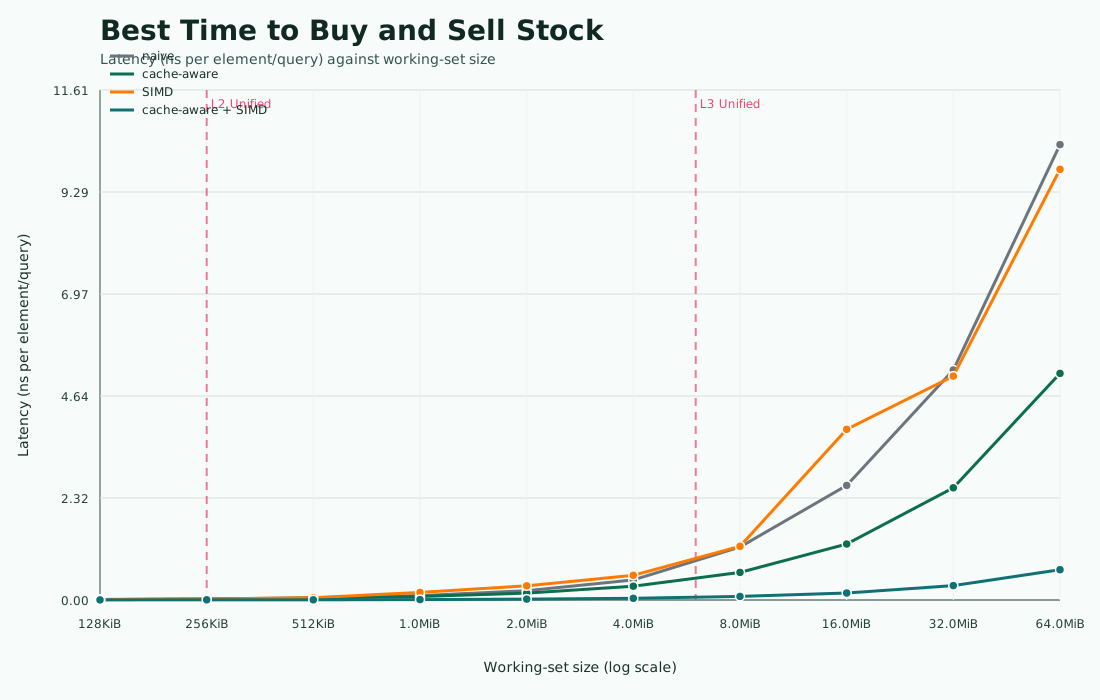
| Stock profit | cache-aware + SIMD | 0.6901 ns vs naive 10.3663 ns; timing strongly supports the verdict. |
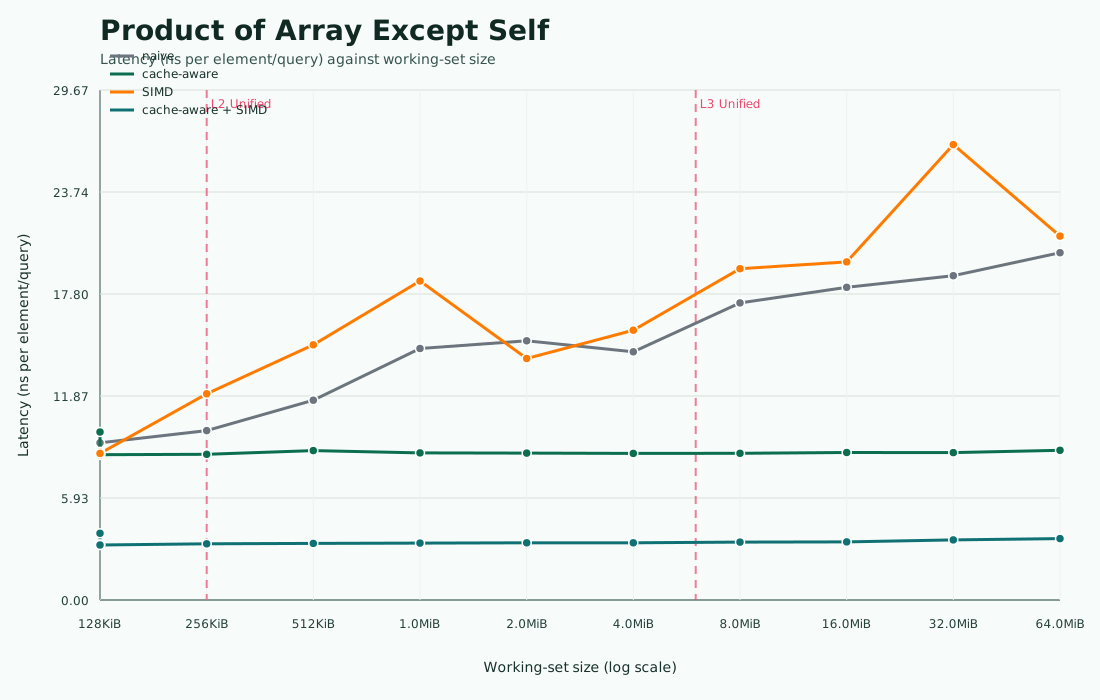
| Product except self | cache-aware + SIMD | 3.5731 ns vs naive 20.2096 ns; timing strongly supports the verdict. |
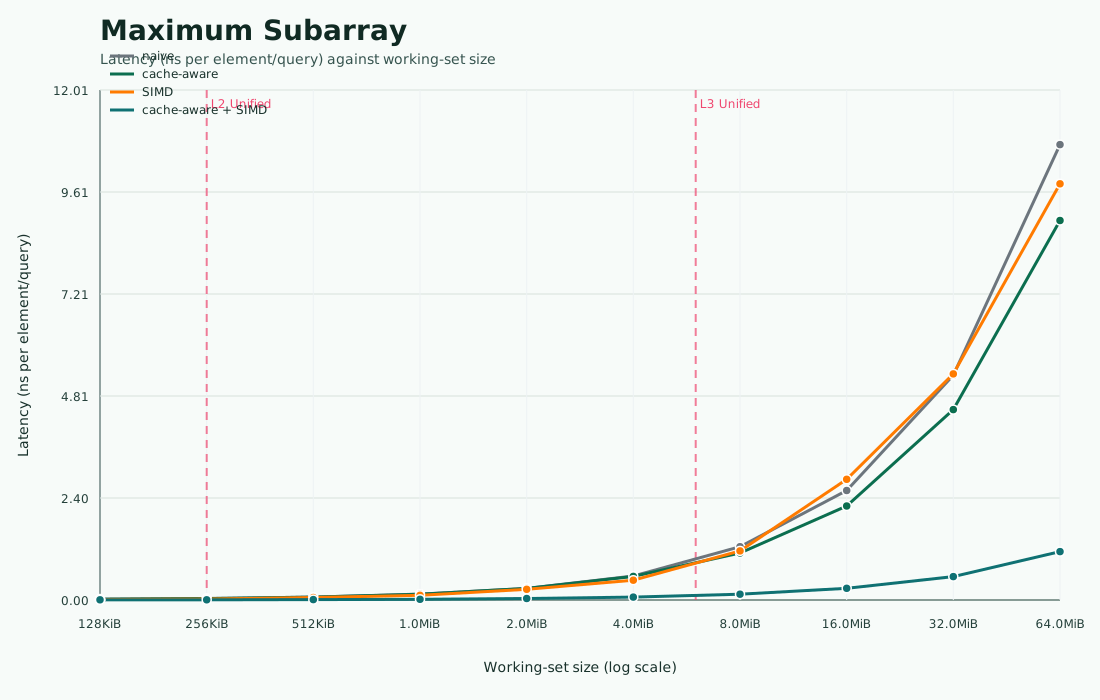
| Maximum subarray | cache-aware + SIMD | 1.1407 ns vs naive 10.7273 ns; timing strongly supports the verdict. |
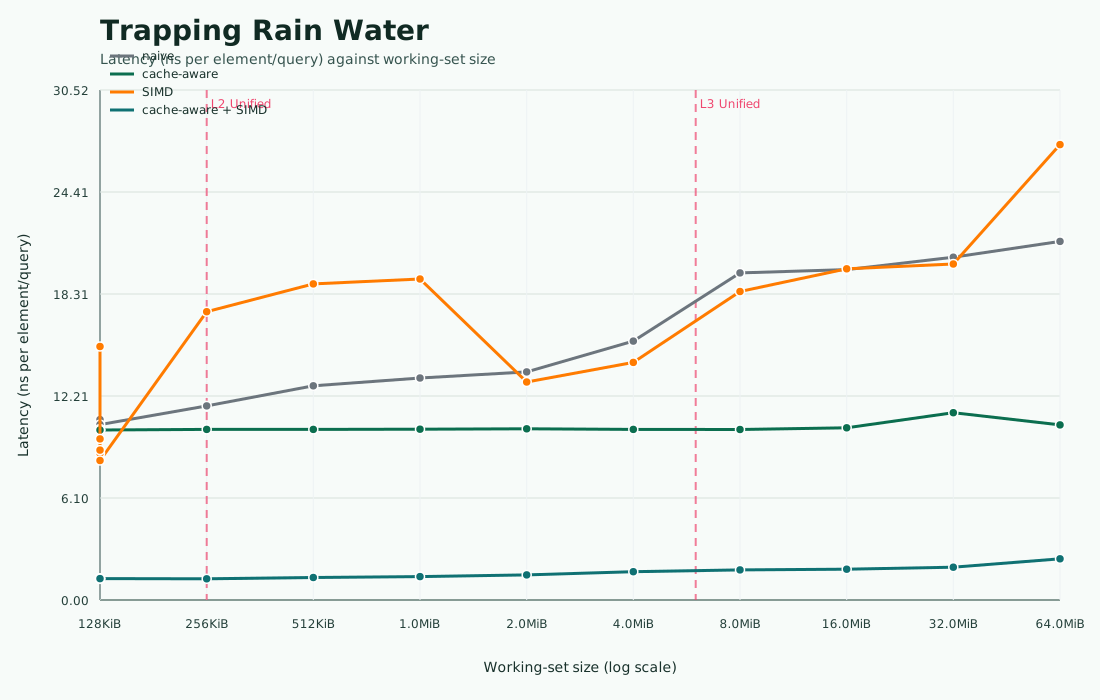
| Trapping rain water | cache-aware + SIMD | 2.4624 ns vs naive 21.4591 ns; timing strongly supports the verdict. |
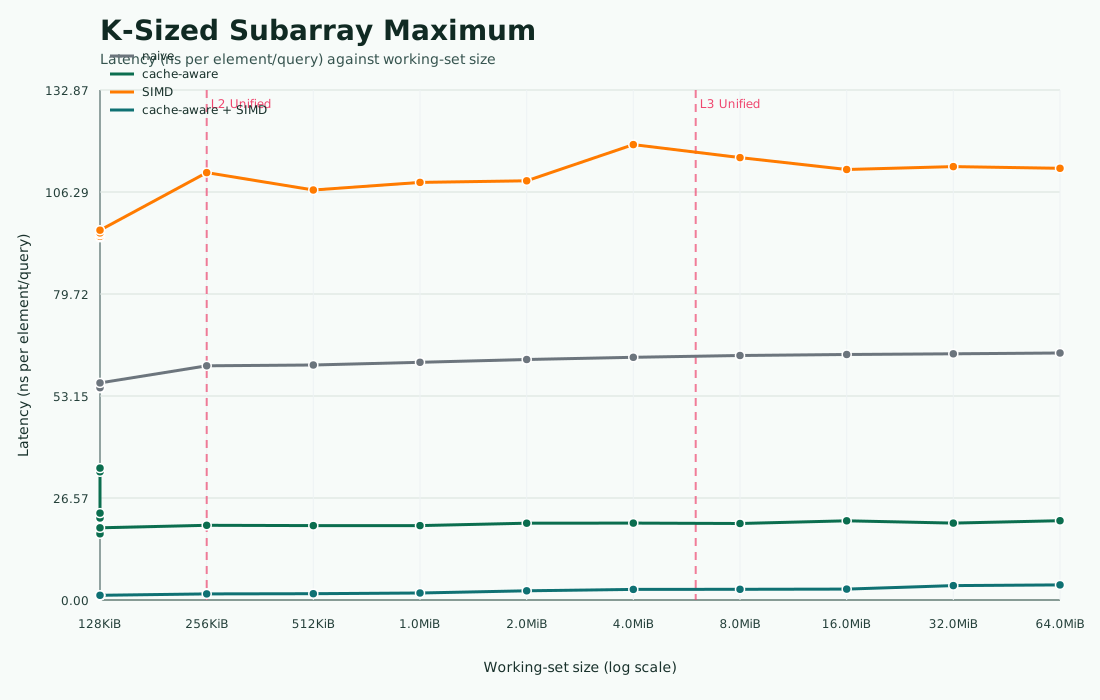
| K-sized window maximum | cache-aware + SIMD | 3.9415 ns vs naive 64.3484 ns; timing strongly supports the verdict. |
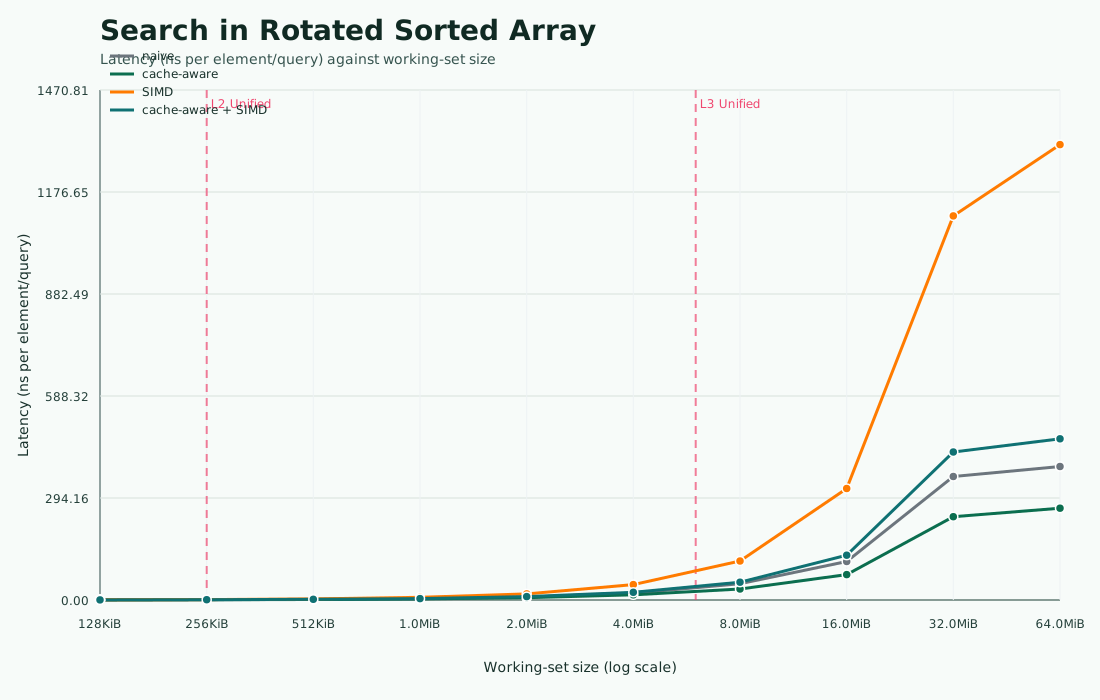
| Rotated search | cache-aware scalar | 264.8689 ns; SIMD variants lose. Evidence says branchy search did not benefit from SIMD here. |
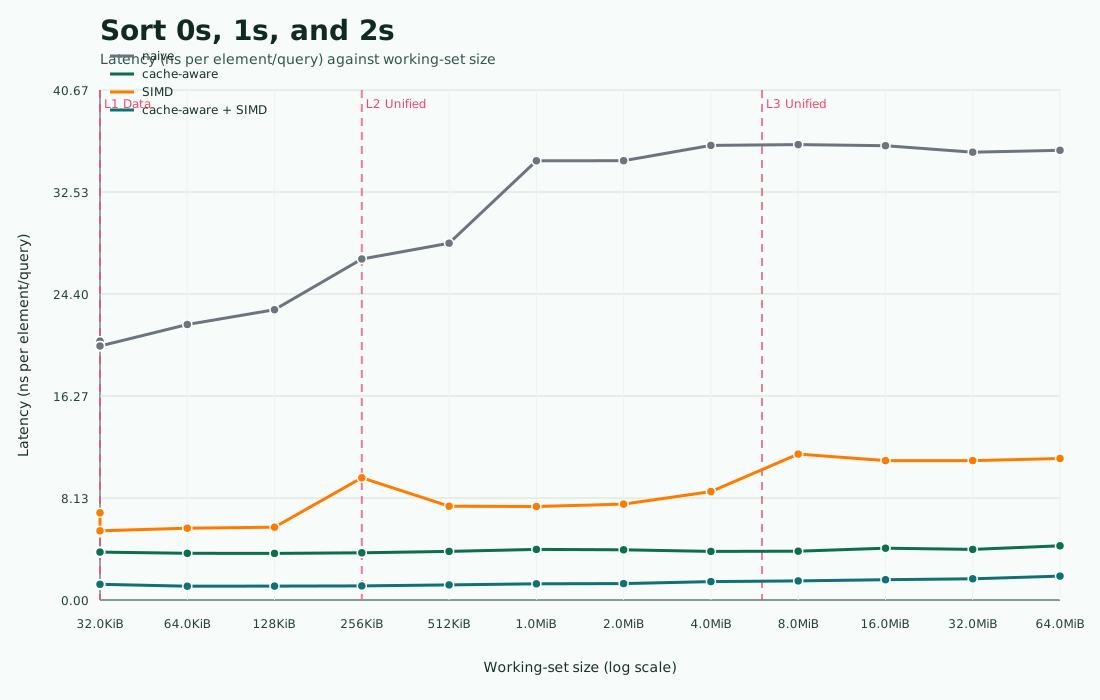
| Sort 0/1/2 | cache-aware + SIMD | 1.9068 ns vs naive 35.8583 ns; timing strongly supports the verdict. |
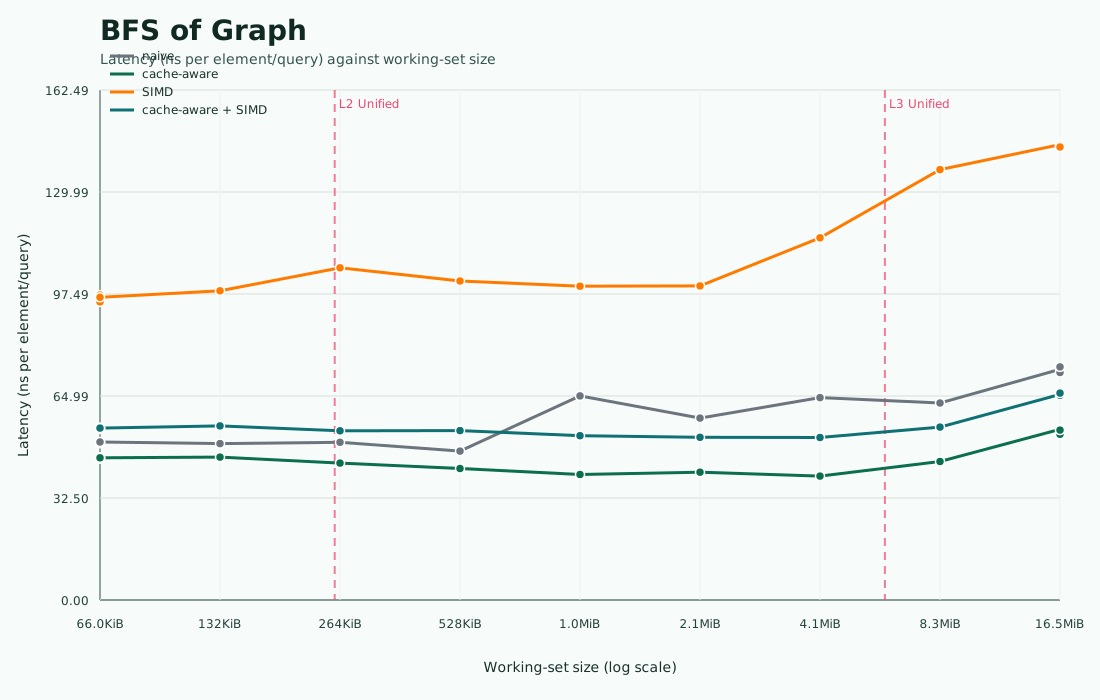
| BFS | cache-aware scalar | 54.1225 ns; CSR scalar beats both SIMD forms. Evidence says layout mattered more than SIMD. |
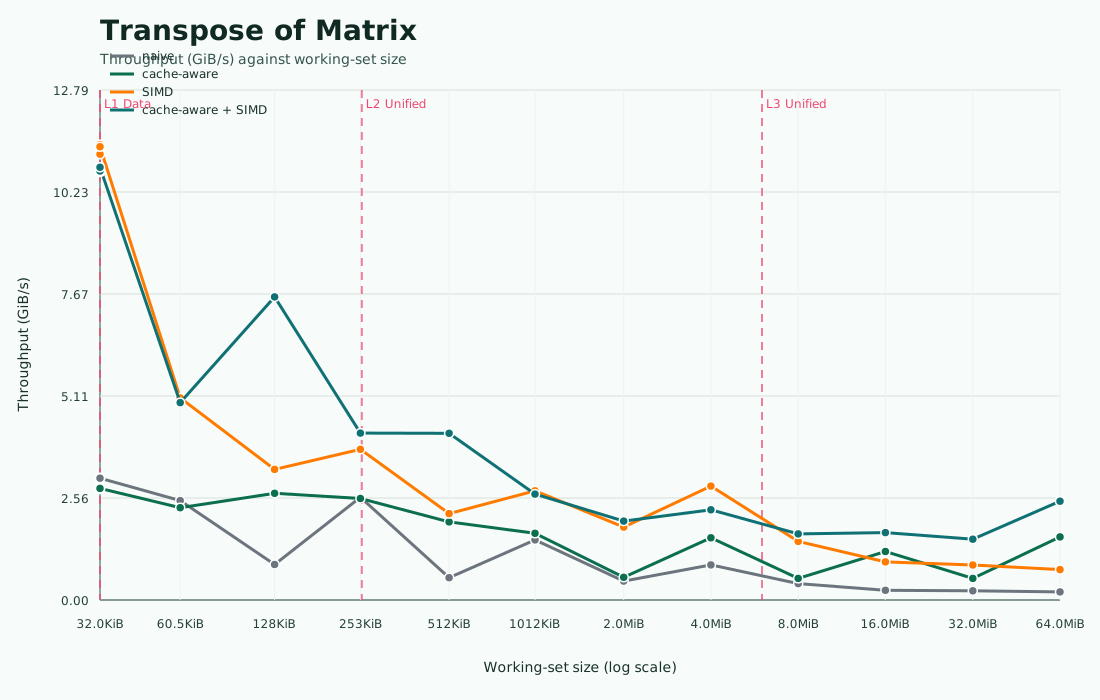
| Matrix transpose | cache-aware + SIMD | 2.4765 GiB/s vs naive 0.2023 GiB/s; blocking and SIMD both matter. |
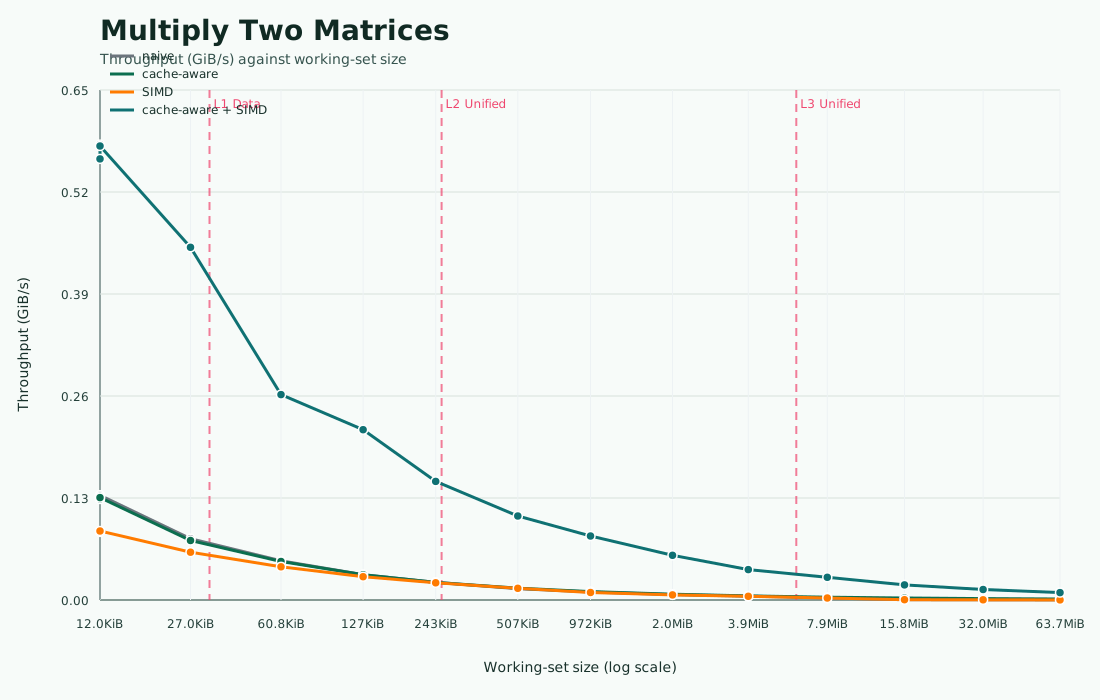
| Matrix multiply | cache-aware + SIMD | 0.0094 GiB/s at true 64 MiB requested size; blocked AVX2 wins. |
4. Question-by-Question Evidence
4.1 Best Time to Buy and Sell Stock
Given daily prices, find the maximum profit from one buy followed by one sell.naive:
memory: [price|cold...][price|cold...][price|cold...]
use 1 float skip 15 floats use 1 float
work: scan one lane at a time and update min/best
cache-aware:
memory: prices[] = [p0 p1 p2 p3 p4 p5 ...]
work: same min/best scan, but every cache line is mostly useful prices
SIMD:
lanes: [lane0 lane1 lane2 lane3 lane4 lane5 lane6 lane7]
load: gather 8 prices from 8 wide AoS records
issue: SIMD arithmetic is wide, but memory still jumps around
cache-aware + SIMD:
lanes: packed load [p0 p1 p2 p3 p4 p5 p6 p7]
work: update 8 independent min/best states with one dense vector load// Naive: one scalar pass per lane over 64-byte AoS records.
// Major difference: every useful price lives beside 15 cold fields.
NOINLINE NOVECTOR float stock_naive_aos(const WideRecord<float>* aos, std::size_t length) {
float total = 0.0f;
for (std::size_t lane = 0; lane < kBatchLanes; ++lane) {
float min_price = std::numeric_limits<float>::infinity();
float best = 0.0f;
for (std::size_t index = 0; index < length; ++index) {
// This load is the cost center: one cache-line-sized record is touched
// even though the algorithm only needs the value field.
const float price = aos[lane * length + index].value;
min_price = std::min(min_price, price);
best = std::max(best, price - min_price);
}
total += best;
}
return total;
}
// Cache-aware: same algorithm, but hot prices are contiguous.
// Major difference: the data layout changes, not the stock-profit logic.
NOINLINE NOVECTOR float stock_cache_soa(const float* hot, std::size_t length) {
float total = 0.0f;
for (std::size_t lane = 0; lane < kBatchLanes; ++lane) {
// values points at a dense lane of prices; no cold fields are carried along.
const float* values = hot + lane * length;
float min_price = std::numeric_limits<float>::infinity();
float best = 0.0f;
for (std::size_t index = 0; index < length; ++index) {
// This is the cache-aware win: values[index] advances linearly.
min_price = std::min(min_price, values[index]);
best = std::max(best, values[index] - min_price);
}
total += best;
}
return total;
}
// SIMD: eight independent stock streams, but each load is a gather from AoS.
// Major difference from naive: arithmetic is eight-wide, memory is still scattered.
NOINLINE float stock_simd_aos(const WideRecord<float>* aos, std::size_t length) {
__m256 min_values = _mm256_set1_ps(std::numeric_limits<float>::infinity());
__m256 best_values = _mm256_setzero_ps();
for (std::size_t index = 0; index < length; ++index) {
// The gather is the limiting part: AVX2 has to fetch one hot field from
// each wide record instead of reading one contiguous 32-byte vector.
const __m256 prices = gather_hot_values(aos, length, index);
min_values = _mm256_min_ps(min_values, prices);
best_values = _mm256_max_ps(best_values, _mm256_sub_ps(prices, min_values));
}
return horizontal_sum_ps(best_values);
}
// Cache-aware + SIMD: eight independent streams loaded as one packed AVX2 vector.
// Major difference from plain SIMD: this replaces gather with a dense vector load.
NOINLINE float stock_cache_simd_soa(const float* hot, std::size_t length) {
__m256 min_values = _mm256_set1_ps(std::numeric_limits<float>::infinity());
__m256 best_values = _mm256_setzero_ps();
for (std::size_t index = 0; index < length; ++index) {
// One aligned load gives all eight lane prices. This is the measured winner.
const __m256 prices = _mm256_load_ps(hot + index * kBatchLanes);
min_values = _mm256_min_ps(min_values, prices);
best_values = _mm256_max_ps(best_values, _mm256_sub_ps(prices, min_values));
}
return horizontal_sum_ps(best_values);
}
| Variant | 64 MiB timing | IPC | cache miss % | L1 miss % | dTLB miss % |
|---|---|---|---|---|---|
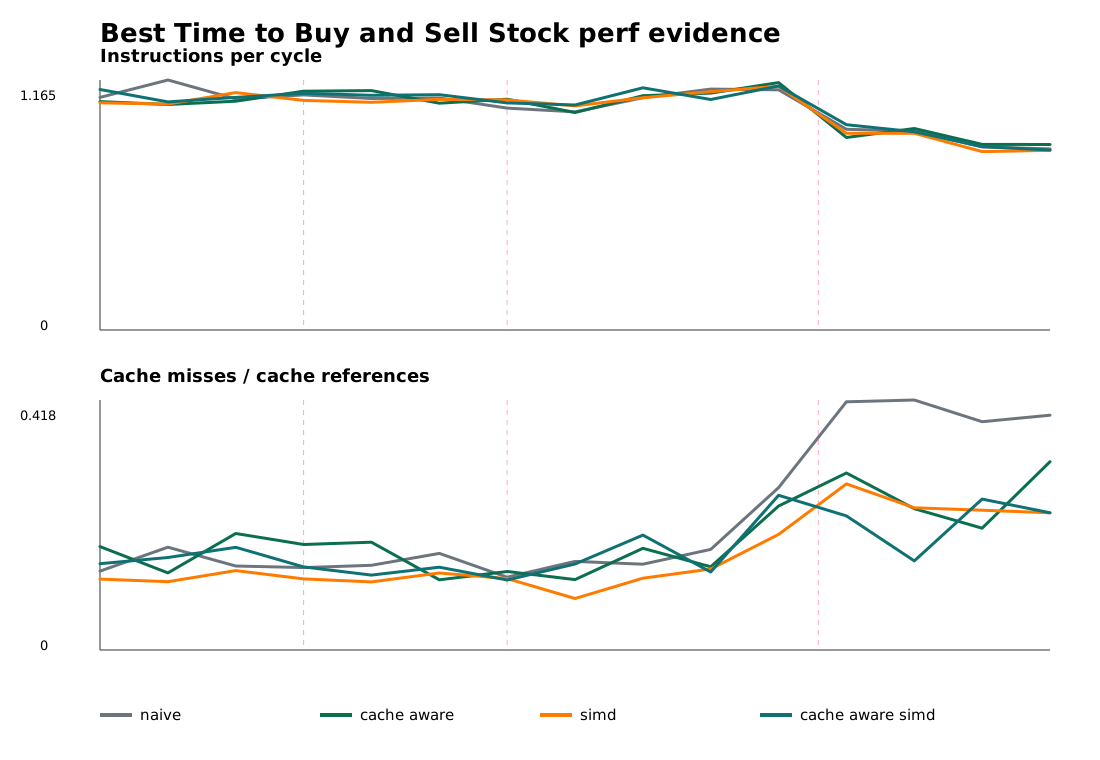
| naive | 10.3663 ns | 0.844 | 39.26 | 31.62 | 0.21 |
| cache-aware | 5.1578 ns | 0.864 | 31.49 | 30.81 | 0.19 |
| SIMD | 9.8042 ns | 0.838 | 22.94 | 31.99 | 0.24 |
| cache-aware + SIMD | 0.6901 ns | 0.838 | 22.94 | 31.36 | 0.32 |
4.2 Product of Array Except Self
For every index, return the product of all other elements without division.naive:
pass 1 prefix: [x|cold...][x|cold...][x|cold...] -> work[]
pass 2 suffix: [x|cold...][x|cold...][x|cold...] -> work[]
issue: two passes repeatedly drag cold record fields through cache
cache-aware:
pass 1 prefix: x[] -> work[]
pass 2 suffix: x[] -> work[]
change: same math, dense input stream
SIMD:
prefix/suffix are vector lanes, but each x comes from gather(AoS)
cache-aware + SIMD:
prefix/suffix are vector lanes and each x comes from packed load(SoA)// Naive: prefix/suffix over wide records. Each pass pulls cold fields into cache.
// Major difference: the algorithm scans the input twice, so AoS waste is paid twice.
NOINLINE NOVECTOR std::uint64_t product_naive_aos(const WideRecord<std::uint32_t>* aos,
std::size_t length) {
std::vector<std::uint32_t> work(length);
std::uint64_t total = 0;
for (std::size_t lane = 0; lane < kBatchLanes; ++lane) {
const WideRecord<std::uint32_t>* values = aos + lane * length;
std::uint32_t prefix = 1U;
for (std::size_t index = 0; index < length; ++index) {
work[index] = prefix;
// Cost center: values[index].value is useful, but the wide record
// brings cold fields into the cache on the prefix pass.
prefix *= values[index].value;
}
std::uint32_t suffix = 1U;
for (std::size_t index = length; index-- > 0;) {
work[index] *= suffix;
// Same wide-record penalty again on the reverse suffix pass.
suffix *= values[index].value;
}
total += sample_checksum(work.data(), length);
}
return total;
}
// Cache-aware: same prefix/suffix math over dense values.
// Major difference: only the representation changes; prefix/suffix semantics match naive.
NOINLINE NOVECTOR std::uint64_t product_cache_soa(const std::uint32_t* hot,
std::size_t length) {
std::vector<std::uint32_t> work(length);
std::uint64_t total = 0;
for (std::size_t lane = 0; lane < kBatchLanes; ++lane) {
const std::uint32_t* values = hot + lane * length;
std::uint32_t prefix = 1U;
for (std::size_t index = 0; index < length; ++index) {
work[index] = prefix;
// Dense linear load: each cache line contains many useful values.
prefix *= values[index];
}
std::uint32_t suffix = 1U;
for (std::size_t index = length; index-- > 0;) {
work[index] *= suffix;
// Reverse scan is still linear over compact data.
suffix *= values[index];
}
total += sample_checksum(work.data(), length);
}
return total;
}
// SIMD: vectorized prefix/suffix, but values are gathered from wide records.
// Major difference from cache-aware + SIMD: gather keeps the AoS memory penalty.
NOINLINE std::uint64_t product_simd_aos(const WideRecord<std::uint32_t>* aos,
std::size_t length,
std::uint32_t* temp) {
__m256i prefix = _mm256_set1_epi32(1);
for (std::size_t index = 0; index < length; ++index) {
_mm256_store_si256(reinterpret_cast<__m256i*>(temp + index * kBatchLanes), prefix);
// Eight lanes advance together, but every lane fetches from a different wide record.
prefix = _mm256_mullo_epi32(prefix, gather_hot_u32_values(aos, length, index));
}
__m256i suffix = _mm256_set1_epi32(1);
for (std::size_t index = length; index-- > 0;) {
const __m256i prefix_values =
_mm256_load_si256(reinterpret_cast<const __m256i*>(temp + index * kBatchLanes));
_mm256_store_si256(reinterpret_cast<__m256i*>(temp + index * kBatchLanes),
_mm256_mullo_epi32(prefix_values, suffix));
// Reverse pass repeats the gather-heavy access pattern.
suffix = _mm256_mullo_epi32(suffix, gather_hot_u32_values(aos, length, index));
}
return sample_checksum(temp, length * kBatchLanes);
}
// Cache-aware + SIMD: vectorized prefix/suffix over packed lanes.
// Major difference from plain SIMD: hot values are already interleaved for AVX2.
NOINLINE std::uint64_t product_cache_simd_soa(const std::uint32_t* hot,
std::size_t length,
std::uint32_t* temp) {
__m256i prefix = _mm256_set1_epi32(1);
for (std::size_t index = 0; index < length; ++index) {
_mm256_store_si256(reinterpret_cast<__m256i*>(temp + index * kBatchLanes), prefix);
// Packed load: one 32-byte read supplies the next value for all eight lanes.
prefix = _mm256_mullo_epi32(
prefix,
_mm256_load_si256(reinterpret_cast<const __m256i*>(hot + index * kBatchLanes)));
}
__m256i suffix = _mm256_set1_epi32(1);
for (std::size_t index = length; index-- > 0;) {
const __m256i prefix_values =
_mm256_load_si256(reinterpret_cast<const __m256i*>(temp + index * kBatchLanes));
_mm256_store_si256(reinterpret_cast<__m256i*>(temp + index * kBatchLanes),
_mm256_mullo_epi32(prefix_values, suffix));
// The suffix pass stays packed too, so SIMD and cache layout reinforce each other.
suffix = _mm256_mullo_epi32(
suffix,
_mm256_load_si256(reinterpret_cast<const __m256i*>(hot + index * kBatchLanes)));
}
return sample_checksum(temp, length * kBatchLanes);
}
| Variant | 64 MiB timing | IPC | cache miss % | L1 miss % | dTLB miss % |
|---|---|---|---|---|---|
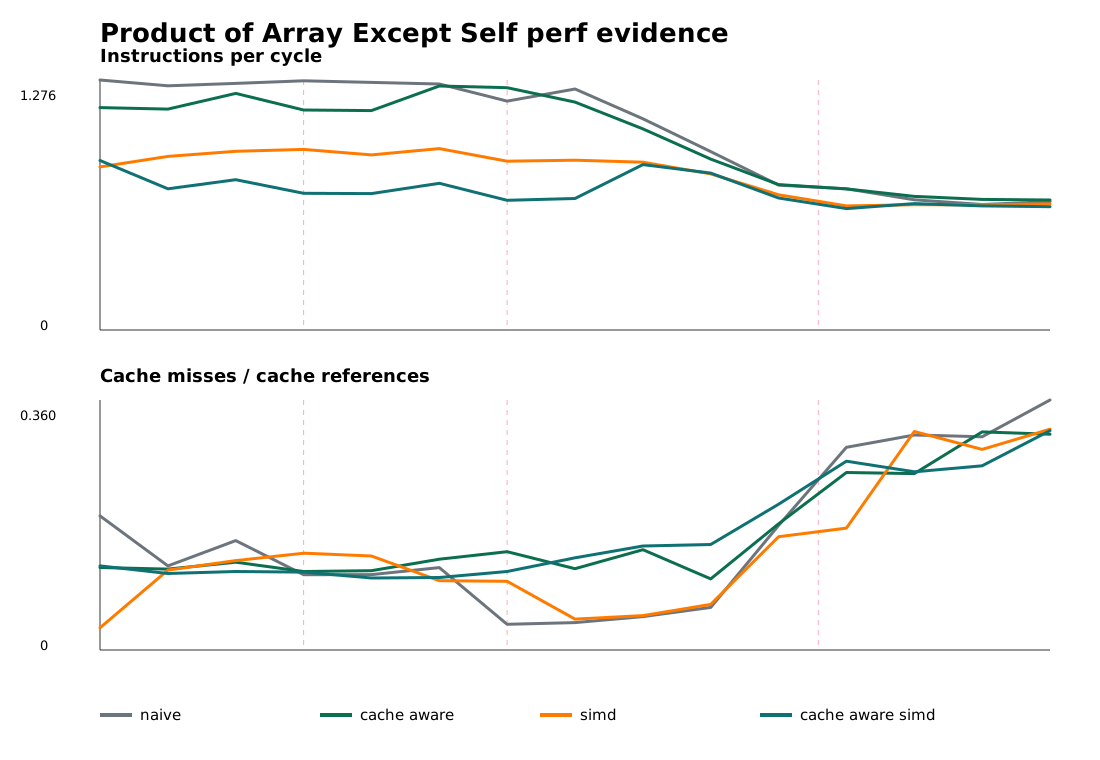
| naive | 20.2096 ns | 0.655 | 36.02 | 47.53 | 0.22 |
| cache-aware | 8.7122 ns | 0.664 | 31.08 | 44.56 | 0.18 |
| SIMD | 21.1712 ns | 0.644 | 31.81 | 47.80 | 0.24 |
| cache-aware + SIMD | 3.5731 ns | 0.630 | 31.61 | 46.60 | 0.17 |
4.3 Maximum Subarray
Find the contiguous subarray with the largest sum.naive:
lane0 AoS: [v|cold...][v|cold...][v|cold...] -> current,best
issue: Kadane is simple, but each scalar load touches a wide record
cache-aware:
lane0 SoA: [v v v v v v ...] -> current,best
change: same dependency chain, less wasted cache traffic
SIMD:
8 independent chains:
current = max(v, current + v)
issue: values arrive through gathers from AoS
cache-aware + SIMD:
packed values feed 8 chains:
[v0 v1 v2 v3 v4 v5 v6 v7] -> current/best vectors// Naive: Kadane on each AoS lane.
// Major difference: the math is O(n), but the hot value is embedded in a cold record.
NOINLINE NOVECTOR float max_subarray_naive_aos(const WideRecord<float>* aos, std::size_t length) {
float total = 0.0f;
for (std::size_t lane = 0; lane < kBatchLanes; ++lane) {
float current = aos[lane * length].value;
float best = current;
for (std::size_t index = 1; index < length; ++index) {
// This is the same Kadane recurrence as every other scalar version.
// The waste is the AoS load, not the recurrence.
const float value = aos[lane * length + index].value;
current = std::max(value, current + value);
best = std::max(best, current);
}
total += best;
}
return total;
}
// Cache-aware: Kadane over dense values.
// Major difference from naive: values[index] is a compact linear stream.
NOINLINE NOVECTOR float max_subarray_cache_soa(const float* hot, std::size_t length) {
float total = 0.0f;
for (std::size_t lane = 0; lane < kBatchLanes; ++lane) {
const float* values = hot + lane * length;
float current = values[0];
float best = current;
for (std::size_t index = 1; index < length; ++index) {
// Same dependency chain, but the input cache line is all useful data.
current = std::max(values[index], current + values[index]);
best = std::max(best, current);
}
total += best;
}
return total;
}
// SIMD: eight independent Kadane chains, with AoS gathers.
// Major difference: this does not vectorize one chain; it runs eight chains in parallel.
NOINLINE float max_subarray_simd_aos(const WideRecord<float>* aos, std::size_t length) {
__m256 current = gather_hot_values(aos, length, 0);
__m256 best = current;
for (std::size_t index = 1; index < length; ++index) {
// Gather supplies one value per chain, but memory is still scattered.
const __m256 values = gather_hot_values(aos, length, index);
current = _mm256_max_ps(values, _mm256_add_ps(current, values));
best = _mm256_max_ps(best, current);
}
return horizontal_sum_ps(best);
}
// Cache-aware + SIMD: eight chains with one packed load per step.
// Major difference from SIMD AoS: the recurrence is the same, the load is packed.
NOINLINE float max_subarray_cache_simd_soa(const float* hot, std::size_t length) {
__m256 current = _mm256_load_ps(hot);
__m256 best = current;
for (std::size_t index = 1; index < length; ++index) {
// This load is why the vector version finally pays off: no gather, no cold fields.
const __m256 values = _mm256_load_ps(hot + index * kBatchLanes);
current = _mm256_max_ps(values, _mm256_add_ps(current, values));
best = _mm256_max_ps(best, current);
}
return horizontal_sum_ps(best);
}
| Variant | 64 MiB timing | IPC | cache miss % | L1 miss % | dTLB miss % |
|---|---|---|---|---|---|
| naive | 10.7273 ns | 0.821 | 33.54 | 32.80 | 0.24 |
| cache-aware | 8.9412 ns | 0.844 | 27.26 | 31.60 | 0.22 |
| SIMD | 9.8056 ns | 0.841 | 31.80 | 33.00 | 0.21 |
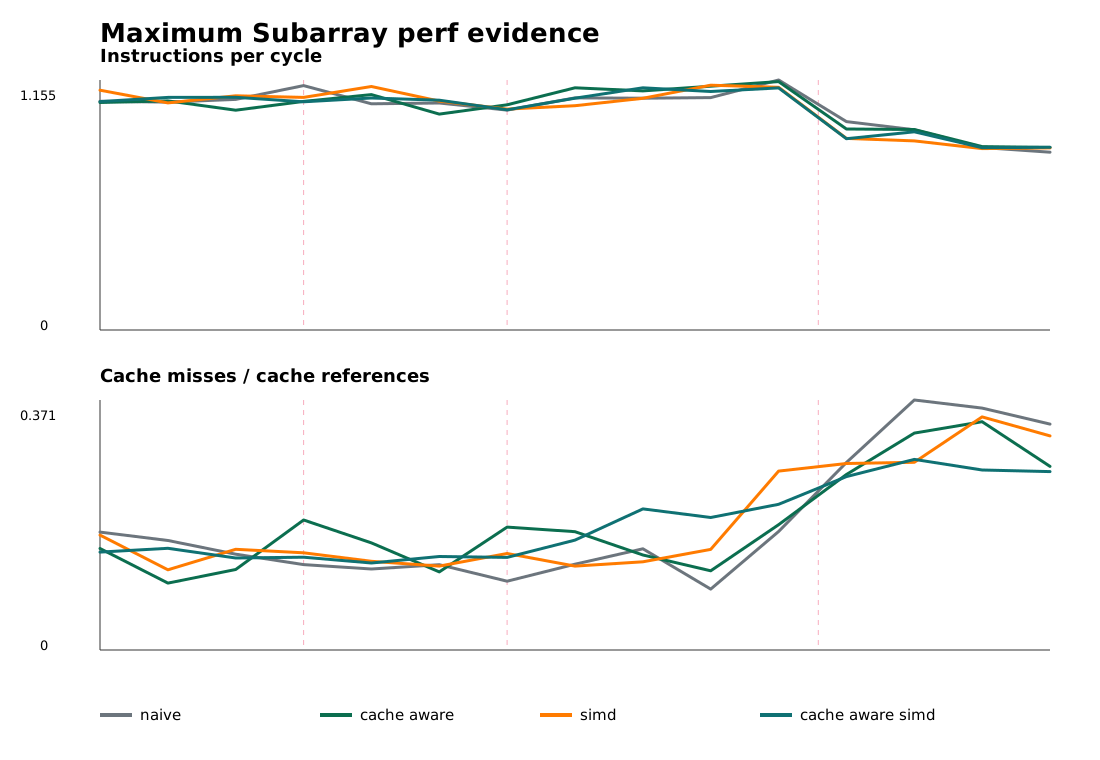
| cache-aware + SIMD | 1.1407 ns | 0.844 | 26.50 | 31.98 | 0.23 |
4.4 Trapping Rain Water
Given bar heights, compute how much water is trapped.naive:
left pass: [h|cold...][h|cold...][h|cold...] -> left_max[]
right pass: [h|cold...][h|cold...][h|cold...] -> water sum
issue: both passes reread wide records
cache-aware:
left pass: h[] -> left_max[]
right pass: h[] -> water sum
change: same two-pass method over dense heights
SIMD:
vector left/right maxima, but h values come from gathers
cache-aware + SIMD:
packed h vectors -> packed left_max[] -> packed water sum// Naive: build left maxima and scan right maxima over wide records.
// Major difference: the algorithm touches heights twice, so AoS waste is repeated.
NOINLINE NOVECTOR float rain_naive_aos(const WideRecord<float>* aos, std::size_t length) {
std::vector<float> left(length);
float total = 0.0f;
for (std::size_t lane = 0; lane < kBatchLanes; ++lane) {
const WideRecord<float>* values = aos + lane * length;
float left_max = values[0].value;
for (std::size_t index = 0; index < length; ++index) {
// Forward pass: each height load also pulls cold fields into cache.
left_max = std::max(left_max, values[index].value);
left[index] = left_max;
}
float right_max = values[length - 1].value;
for (std::size_t index = length; index-- > 0;) {
// Reverse pass: the same wide-record pattern is paid again.
right_max = std::max(right_max, values[index].value);
total += std::max(0.0f, std::min(left[index], right_max) - values[index].value);
}
}
return total;
}
// Cache-aware: same two-pass idea over dense heights.
// Major difference from naive: left/right scans are linear reads of hot heights.
NOINLINE NOVECTOR float rain_cache_soa(const float* hot, std::size_t length) {
std::vector<float> left(length);
float total = 0.0f;
for (std::size_t lane = 0; lane < kBatchLanes; ++lane) {
const float* values = hot + lane * length;
float left_max = values[0];
for (std::size_t index = 0; index < length; ++index) {
// Dense forward pass: left[] still costs memory, but input no longer wastes cache.
left_max = std::max(left_max, values[index]);
left[index] = left_max;
}
float right_max = values[length - 1];
for (std::size_t index = length; index-- > 0;) {
// Dense reverse pass: right_max and water use contiguous heights.
right_max = std::max(right_max, values[index]);
total += std::max(0.0f, std::min(left[index], right_max) - values[index]);
}
}
return total;
}
// SIMD: vectorized left/right maxima, but heights are gathered from AoS.
// Major difference: vector math is wide, but both passes still gather from wide records.
NOINLINE float rain_simd_aos(const WideRecord<float>* aos, std::size_t length, float* left_temp) {
__m256 left_max = _mm256_set1_ps(std::numeric_limits<float>::lowest());
for (std::size_t index = 0; index < length; ++index) {
// Gathered heights feed eight left-max streams.
left_max = _mm256_max_ps(left_max, gather_hot_values(aos, length, index));
_mm256_store_ps(left_temp + index * kBatchLanes, left_max);
}
__m256 right_max = _mm256_set1_ps(std::numeric_limits<float>::lowest());
__m256 total = _mm256_setzero_ps();
for (std::size_t index = length; index-- > 0;) {
// Reverse pass gathers again, so SIMD cannot hide the poor layout.
const __m256 values = gather_hot_values(aos, length, index);
right_max = _mm256_max_ps(right_max, values);
const __m256 left_values = _mm256_load_ps(left_temp + index * kBatchLanes);
const __m256 water = _mm256_sub_ps(_mm256_min_ps(left_values, right_max), values);
total = _mm256_add_ps(total, _mm256_max_ps(water, _mm256_setzero_ps()));
}
return horizontal_sum_ps(total);
}
// Cache-aware + SIMD: vectorized two-pass scan over packed heights.
// Major difference from SIMD AoS: every height vector is a packed load.
NOINLINE float rain_cache_simd_soa(const float* hot, std::size_t length, float* left_temp) {
__m256 left_max = _mm256_set1_ps(std::numeric_limits<float>::lowest());
for (std::size_t index = 0; index < length; ++index) {
// Packed forward pass: one vector load updates eight left maxima.
const __m256 values = _mm256_load_ps(hot + index * kBatchLanes);
left_max = _mm256_max_ps(left_max, values);
_mm256_store_ps(left_temp + index * kBatchLanes, left_max);
}
__m256 right_max = _mm256_set1_ps(std::numeric_limits<float>::lowest());
__m256 total = _mm256_setzero_ps();
for (std::size_t index = length; index-- > 0;) {
// Packed reverse pass: this is where cache-aware layout and SIMD combine.
const __m256 values = _mm256_load_ps(hot + index * kBatchLanes);
right_max = _mm256_max_ps(right_max, values);
const __m256 left_values = _mm256_load_ps(left_temp + index * kBatchLanes);
const __m256 water = _mm256_sub_ps(_mm256_min_ps(left_values, right_max), values);
total = _mm256_add_ps(total, _mm256_max_ps(water, _mm256_setzero_ps()));
}
return horizontal_sum_ps(total);
}
| Variant | 64 MiB timing | IPC | cache miss % | L1 miss % | dTLB miss % |
|---|---|---|---|---|---|
| naive | 21.4591 ns | 0.859 | 39.19 | 33.23 | 0.19 |
| cache-aware | 10.4751 ns | 0.869 | 31.42 | 31.39 | 0.21 |
| SIMD | 27.2468 ns | 0.834 | 24.98 | 33.45 | 0.24 |
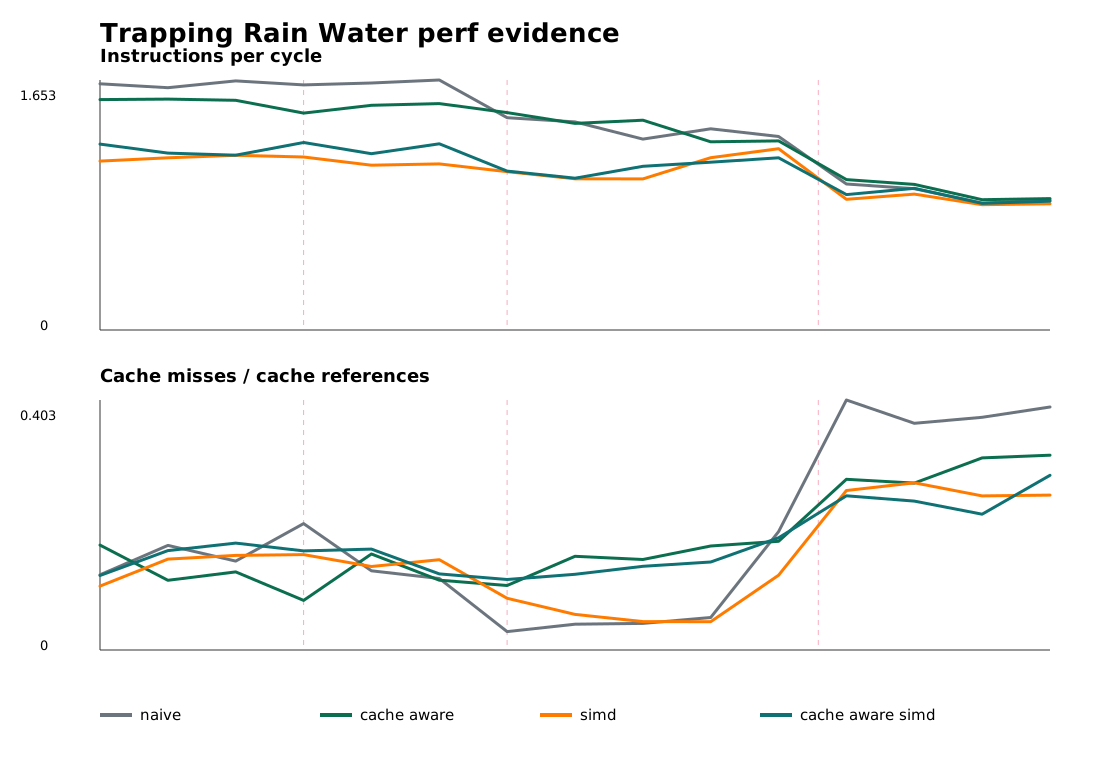
| cache-aware + SIMD | 2.4624 ns | 0.852 | 28.18 | 31.57 | 0.20 |
4.5 K-Sized Subarray Maximum
For every fixed-width window, report the maximum value.naive:
window 0: scan 32 values from AoS records
window 1: scan mostly the same 32 values again
issue: repeated work + cold fields
cache-aware:
dense h[] + deque:
push new index, pop expired/smaller indexes, front is max
change: O(n * window) becomes O(n) per lane
SIMD:
8 lanes scan each 32-wide window, but every value is gathered
cache-aware + SIMD:
block left maxima + block right maxima over packed lanes
max(window) = max(right[start], left[start + width - 1])// Naive: recompute each window maximum over wide records.
// Major difference: this does repeated O(window) work for every output window.
NOINLINE NOVECTOR float window_max_naive_aos(const WideRecord<float>* aos, std::size_t length) {
float total = 0.0f;
for (std::size_t lane = 0; lane < kBatchLanes; ++lane) {
const WideRecord<float>* values = aos + lane * length;
for (std::size_t start = 0; start + kWindowWidth <= length; ++start) {
// Every new start rereads most of the previous window.
float window_max = values[start].value;
for (std::size_t offset = 1; offset < kWindowWidth; ++offset) {
// AoS penalty: each comparison touches a wide record for one hot value.
window_max = std::max(window_max, values[start + offset].value);
}
total += window_max;
}
}
return total;
}
// Cache-aware: monotonic deque over dense values, O(n) per lane.
// Major difference from naive: algorithmic work drops from repeated scans to one pass.
NOINLINE NOVECTOR float window_max_cache_soa(const float* hot, std::size_t length) {
float total = 0.0f;
for (std::size_t lane = 0; lane < kBatchLanes; ++lane) {
const float* values = hot + lane * length;
std::deque<std::size_t> deque;
for (std::size_t index = 0; index < length; ++index) {
// Remove indexes that are no longer inside the window.
while (!deque.empty() && deque.front() + kWindowWidth <= index) {
deque.pop_front();
}
// Maintain decreasing values. This is the section that avoids rescanning
// the whole window for every output.
while (!deque.empty() && values[deque.back()] <= values[index]) {
deque.pop_back();
}
deque.push_back(index);
if (index + 1 >= kWindowWidth) {
total += values[deque.front()];
}
}
}
return total;
}
// SIMD: recompute each window maximum for eight lanes with AoS gathers.
// Major difference: SIMD widens the repeated scan, but it does not fix repeated work.
NOINLINE float window_max_simd_aos(const WideRecord<float>* aos, std::size_t length) {
__m256 total = _mm256_setzero_ps();
for (std::size_t start = 0; start + kWindowWidth <= length; ++start) {
__m256 window_max = gather_hot_values(aos, length, start);
for (std::size_t offset = 1; offset < kWindowWidth; ++offset) {
// This inner loop performs 32 gathered loads per output window.
window_max = _mm256_max_ps(window_max, gather_hot_values(aos, length, start + offset));
}
total = _mm256_add_ps(total, window_max);
}
return horizontal_sum_ps(total);
}
// Cache-aware + SIMD: prefix/suffix block maxima over packed lanes.
// Major difference from SIMD AoS: no repeated 32-load window scan.
NOINLINE float window_max_cache_simd_soa(const float* hot,
std::size_t length,
float* left_temp,
float* right_temp) {
__m256 block_left = _mm256_setzero_ps();
for (std::size_t index = 0; index < length; ++index) {
// Build left maxima inside each kWindowWidth block using packed loads.
const __m256 values = _mm256_load_ps(hot + index * kBatchLanes);
block_left = (index % kWindowWidth == 0) ? values : _mm256_max_ps(block_left, values);
_mm256_store_ps(left_temp + index * kBatchLanes, block_left);
}
__m256 block_right = _mm256_setzero_ps();
for (std::size_t reverse = length; reverse-- > 0;) {
// Build right maxima from the other direction, also packed.
const __m256 values = _mm256_load_ps(hot + reverse * kBatchLanes);
block_right = (reverse == length - 1 || ((reverse + 1) % kWindowWidth == 0))
? values
: _mm256_max_ps(block_right, values);
_mm256_store_ps(right_temp + reverse * kBatchLanes, block_right);
}
__m256 total = _mm256_setzero_ps();
for (std::size_t start = 0; start + kWindowWidth <= length; ++start) {
// Window max is composed from two precomputed block maxima.
// This is the major speed difference versus rescanning each window.
const __m256 left_value = _mm256_load_ps(left_temp + (start + kWindowWidth - 1) * kBatchLanes);
const __m256 right_value = _mm256_load_ps(right_temp + start * kBatchLanes);
total = _mm256_add_ps(total, _mm256_max_ps(left_value, right_value));
}
return horizontal_sum_ps(total);
}
| Variant | 64 MiB timing | IPC | cache miss % | L1 miss % | dTLB miss % |
|---|---|---|---|---|---|
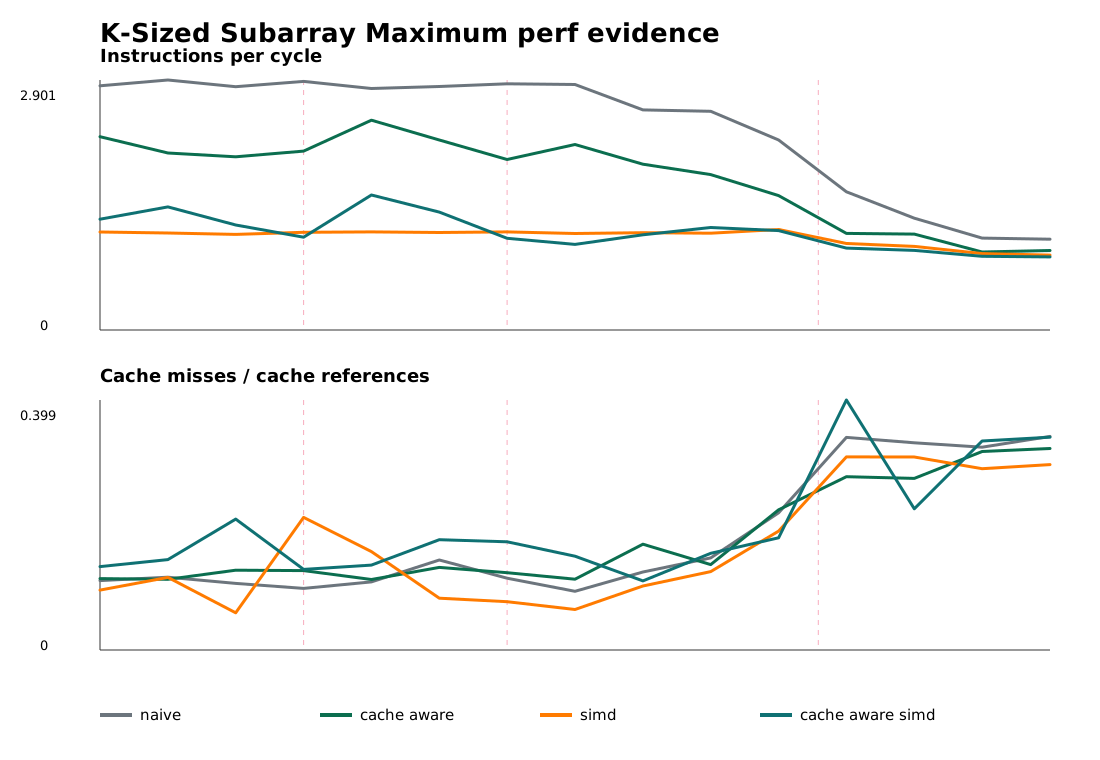
| naive | 64.3484 ns | 1.053 | 34.09 | 24.49 | 0.18 |
| cache-aware | 20.6639 ns | 0.923 | 32.17 | 28.87 | 0.17 |
| SIMD | 112.4712 ns | 0.870 | 29.60 | 24.89 | 0.17 |
| cache-aware + SIMD | 3.9415 ns | 0.848 | 33.98 | 31.84 | 0.22 |
4.6 Search in Rotated Sorted Array
Search target values in a sorted array that has been rotated.naive:
query q:
left ---- mid ---- right
branch decides which half survives
issue: each probe reads values from wide records
cache-aware:
same binary-search decisions, but probes read dense values[]
SIMD:
lane0: left -> right half
lane1: right -> left half
lane2: found
lane3: still active
issue: lanes diverge, masks update per lane, gathers still happen
cache-aware + SIMD:
dense/interleaved values reduce memory waste, but branchy lane divergence remains// Scalar helper used by both scalar layouts.
// Major behavior: every iteration depends on branch decisions from previous probes.
template <typename LoadAt>
NOINLINE NOVECTOR int rotated_search_scalar_value(std::size_t length,
std::uint32_t target,
LoadAt&& load_at) {
int left = 0;
int right = static_cast<int>(length) - 1;
while (left <= right) {
// The branch state is sequential: mid, left, and right change after each decision.
const int mid = left + (right - left) / 2;
const std::uint32_t left_value = load_at(left);
const std::uint32_t mid_value = load_at(mid);
const std::uint32_t right_value = load_at(right);
if (mid_value == target) {
return mid;
}
if (left_value <= mid_value) {
if (left_value <= target && target < mid_value) {
right = mid - 1;
} else {
left = mid + 1;
}
} else if (mid_value < target && target <= right_value) {
left = mid + 1;
} else {
right = mid - 1;
}
}
return -1;
}
// Naive: binary search over wide records for each lane/query.
// Major difference: scalar control flow is already hard to predict, and AoS adds
// wasted memory traffic to every left/mid/right probe.
NOINLINE NOVECTOR std::uint64_t rotated_search_naive_aos(const WideRecord<std::uint32_t>* aos,
const std::uint32_t* queries,
std::size_t length,
std::size_t query_count) {
std::uint64_t sum = 0;
for (std::size_t lane = 0; lane < kBatchLanes; ++lane) {
const WideRecord<std::uint32_t>* values = aos + lane * length;
const std::uint32_t* lane_queries = queries + lane * query_count;
for (std::size_t query = 0; query < query_count; ++query) {
// The load lambda exposes the AoS penalty at every binary-search probe.
sum += static_cast<std::uint32_t>(
rotated_search_scalar_value(length, lane_queries[query],
[values](int i) { return values[i].value; }) + 1);
}
}
return sum;
}
// Cache-aware: same control flow, but array and queries are dense.
// Major difference from naive: same branches, lower memory waste.
NOINLINE NOVECTOR std::uint64_t rotated_search_cache_soa(const std::uint32_t* hot,
const std::uint32_t* queries,
std::size_t length,
std::size_t query_count) {
std::uint64_t sum = 0;
for (std::size_t lane = 0; lane < kBatchLanes; ++lane) {
const std::uint32_t* values = hot + lane * length;
const std::uint32_t* lane_queries = queries + lane * query_count;
for (std::size_t query = 0; query < query_count; ++query) {
// The measured winner: scalar branch behavior remains, but probes are compact.
sum += static_cast<std::uint32_t>(
rotated_search_scalar_value(length, lane_queries[query],
[values](int i) { return values[i]; }) + 1);
}
}
return sum;
}
// SIMD helper: eight searches advance together, but lanes diverge quickly.
// Major difference: SIMD is fighting control flow. Each lane may choose a different half.
template <typename GatherFn>
std::uint64_t rotated_search_simd_common(const std::uint32_t* interleaved_queries,
std::size_t length,
std::size_t query_count,
GatherFn&& gather_values) {
const __m256i zero = _mm256_setzero_si256();
const __m256i one = _mm256_set1_epi32(1);
const __m256i all_bits = _mm256_set1_epi32(-1);
const __m256i max_index = _mm256_set1_epi32(static_cast<int>(length - 1));
const std::size_t max_iterations = std::bit_width(length) + 2;
std::uint64_t sum = 0;
alignas(32) std::array<std::int32_t, kBatchLanes> result_lanes{};
for (std::size_t query = 0; query < query_count; ++query) {
const __m256i target =
_mm256_load_si256(reinterpret_cast<const __m256i*>(interleaved_queries + query * kBatchLanes));
__m256i left = zero;
__m256i right = max_index;
__m256i result = _mm256_set1_epi32(-1);
__m256i active = all_bits;
for (std::size_t iteration = 0; iteration < max_iterations && mask_bits(active) != 0; ++iteration) {
// Inactive lanes are masked out, but the vector loop still carries their state.
const __m256i safe_left = _mm256_blendv_epi8(zero, left, active);
const __m256i safe_right = _mm256_blendv_epi8(zero, right, active);
const __m256i mid = _mm256_srli_epi32(_mm256_add_epi32(safe_left, safe_right), 1);
// This probe may be a gather in both SIMD variants because every lane has
// a different mid after a few iterations.
const __m256i mid_values = gather_values(mid);
const __m256i equal_mask = _mm256_and_si256(active, _mm256_cmpeq_epi32(mid_values, target));
result = _mm256_blendv_epi8(result, mid, equal_mask);
active = _mm256_andnot_si256(equal_mask, active);
if (mask_bits(active) == 0) {
break;
}
const __m256i left_values = gather_values(safe_left);
const __m256i right_values = gather_values(safe_right);
const __m256i left_sorted = cmp_le_epi32(left_values, mid_values);
// These masks implement the scalar if/else tree. This is the major
// reason SIMD loses here: decisions are per lane, not one shared branch.
const __m256i target_in_left =
_mm256_and_si256(cmp_le_epi32(left_values, target), cmp_lt_epi32(target, mid_values));
const __m256i target_in_right =
_mm256_and_si256(cmp_lt_epi32(mid_values, target), cmp_le_epi32(target, right_values));
const __m256i go_right = _mm256_and_si256(
active,
_mm256_or_si256(
_mm256_and_si256(left_sorted, _mm256_andnot_si256(target_in_left, all_bits)),
_mm256_andnot_si256(left_sorted, target_in_right)));
const __m256i go_left = _mm256_and_si256(active, _mm256_andnot_si256(go_right, all_bits));
left = _mm256_blendv_epi8(left, _mm256_add_epi32(mid, one), go_right);
right = _mm256_blendv_epi8(right, _mm256_sub_epi32(mid, one), go_left);
active = _mm256_and_si256(active, cmp_le_epi32(left, right));
}
_mm256_store_si256(reinterpret_cast<__m256i*>(result_lanes.data()), result);
for (std::size_t lane = 0; lane < kBatchLanes; ++lane) {
sum += static_cast<std::uint32_t>(result_lanes[lane] + 1);
}
}
return sum;
}
// SIMD: vectorized search with AoS gathers.
// Major difference from scalar AoS: eight queries run together, but all probes are gathered.
NOINLINE std::uint64_t rotated_search_simd_aos(const WideRecord<std::uint32_t>* aos,
const std::uint32_t* interleaved_queries,
std::size_t length,
std::size_t query_count) {
return rotated_search_simd_common(
interleaved_queries,
length,
query_count,
[aos, length](__m256i logical_indices) {
alignas(32) std::array<std::int32_t, kBatchLanes> indices{};
_mm256_store_si256(reinterpret_cast<__m256i*>(indices.data()), logical_indices);
for (std::size_t lane = 0; lane < kBatchLanes; ++lane) {
// Convert logical lane indexes into AoS byte/word positions.
indices[lane] = indices[lane] * 16 + static_cast<std::int32_t>(lane * length * 16);
}
// Gather from wide records. This combines branch divergence with scattered memory.
return _mm256_i32gather_epi32(reinterpret_cast<const int*>(aos),
_mm256_load_si256(reinterpret_cast<const __m256i*>(indices.data())),
4);
});
}
// Cache-aware + SIMD: vectorized search over interleaved dense lanes.
// Major difference from SIMD AoS: compact data, but still one scattered probe per lane.
NOINLINE std::uint64_t rotated_search_cache_simd_soa(const std::uint32_t* interleaved_hot,
const std::uint32_t* interleaved_queries,
std::size_t length,
std::size_t query_count) {
return rotated_search_simd_common(
interleaved_queries,
length,
query_count,
[interleaved_hot](__m256i logical_indices) {
alignas(32) std::array<std::int32_t, kBatchLanes> indices{};
_mm256_store_si256(reinterpret_cast<__m256i*>(indices.data()), logical_indices);
for (std::size_t lane = 0; lane < kBatchLanes; ++lane) {
// Interleaving reduces stride versus AoS, but per-lane mids still differ.
indices[lane] = indices[lane] * static_cast<std::int32_t>(kBatchLanes) + static_cast<std::int32_t>(lane);
}
// This is cache-friendlier than AoS gather, but not as good as scalar SoA here.
return _mm256_i32gather_epi32(reinterpret_cast<const int*>(interleaved_hot),
_mm256_load_si256(reinterpret_cast<const __m256i*>(indices.data())),
4);
});
}
| Variant | 64 MiB timing | IPC | cache miss % | L1 miss % | dTLB miss % |
|---|---|---|---|---|---|
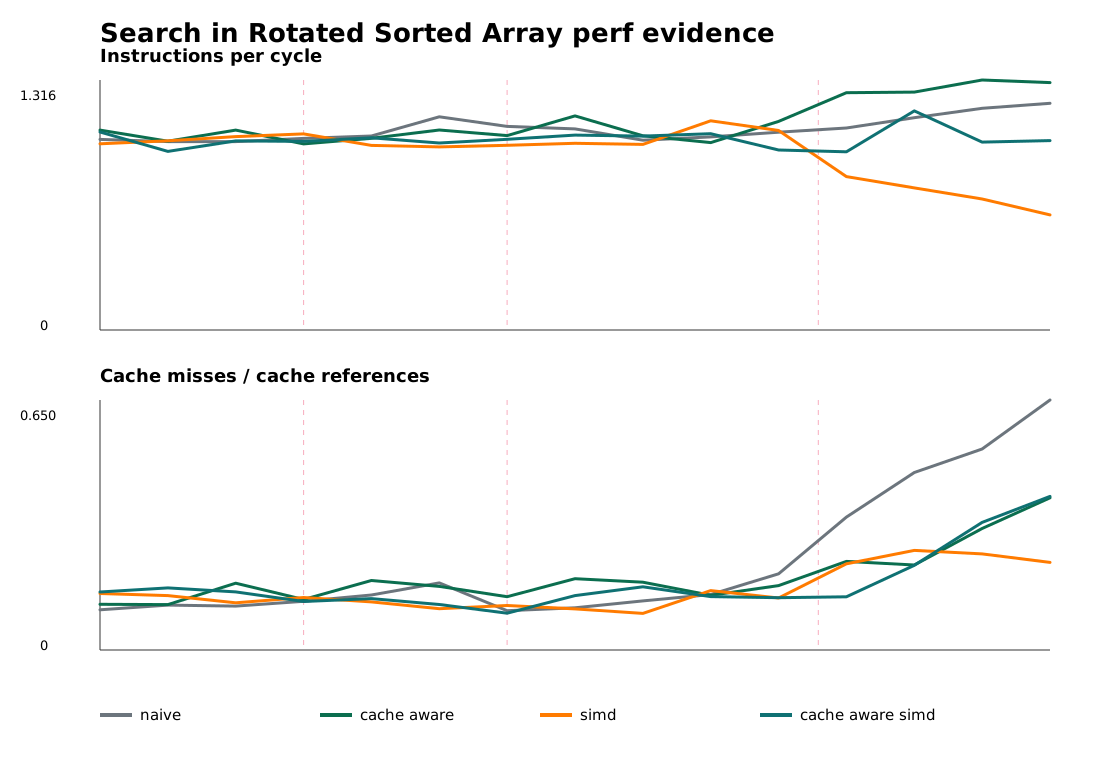
| naive | 384.8632 ns | 1.194 | 64.99 | 21.68 | 0.77 |
| cache-aware | 264.8689 ns | 1.303 | 39.58 | 9.43 | 0.19 |
| SIMD | 1313.2236 ns | 0.606 | 22.77 | 30.67 | 8.14 |
| cache-aware + SIMD | 464.8578 ns | 0.997 | 39.92 | 7.96 | 0.17 |
4.7 Sort 0s, 1s, and 2s
Sort an array whose values are only 0, 1, and 2.naive:
swap records:
[2|cold...] <-> [0|cold...]
issue: sorting one small value moves whole records
cache-aware:
count dense values:
input: [0 2 1 0 2 1 ...]
counts: c0,c1,c2
output: [0 0 ... 1 1 ... 2 2 ...]
SIMD:
gather 8 AoS values, compare to 0/1/2, count masks
cache-aware + SIMD:
packed load 8 dense values, compare to 0/1/2, count masks// Naive: Dutch-national-flag swaps whole 64-byte records.
// Major difference: values are tiny, but every swap moves cold fields too.
NOINLINE NOVECTOR void sort012_naive_aos(Sort012Record* values, std::size_t length) {
std::size_t low = 0;
std::size_t mid = 0;
std::size_t high = length - 1;
while (mid <= high) {
if (values[mid].value == 0U) {
// Cost center: this swap moves the whole record, not just the 0/1/2 value.
std::swap(values[low++], values[mid++]);
} else if (values[mid].value == 1U) {
++mid;
} else {
// Same full-record movement for values that should go to the end.
std::swap(values[mid], values[high--]);
}
}
}
// Cache-aware: count dense values, then materialize dense output.
// Major difference from naive: no record swaps, just count a tiny value domain.
NOINLINE NOVECTOR std::uint64_t sort012_cache_soa(const std::uint32_t* input,
std::uint32_t* output,
std::size_t length) {
std::array<std::size_t, 3> counts{};
for (std::size_t index = 0; index < length; ++index) {
// Dense input makes the counting pass stream through useful data only.
++counts[input[index]];
}
// Materialization is three linear fills; this avoids data-dependent swaps.
std::fill_n(output, counts[0], 0U);
std::fill_n(output + counts[0], counts[1], 1U);
std::fill_n(output + counts[0] + counts[1], counts[2], 2U);
return sample_checksum(output, length);
}
// SIMD: count eight gathered AoS values at a time.
// Major difference: SIMD compares are cheap; gathered AoS loads are the weak part.
NOINLINE std::uint64_t sort012_simd_aos(const Sort012Record* input,
std::uint32_t* output,
std::size_t length) {
constexpr std::int32_t kStrideWords = static_cast<std::int32_t>(sizeof(Sort012Record) / sizeof(std::uint32_t));
const int* base = reinterpret_cast<const int*>(input);
const __m256i zero = _mm256_setzero_si256();
const __m256i one = _mm256_set1_epi32(1);
const __m256i two = _mm256_set1_epi32(2);
std::array<std::size_t, 3> counts{};
std::size_t index = 0;
for (; index + kBatchLanes <= length; index += kBatchLanes) {
// These indexes jump record-by-record to fetch only the value field.
const __m256i gather_indices = _mm256_setr_epi32(static_cast<int>((index + 0) * kStrideWords),
static_cast<int>((index + 1) * kStrideWords),
static_cast<int>((index + 2) * kStrideWords),
static_cast<int>((index + 3) * kStrideWords),
static_cast<int>((index + 4) * kStrideWords),
static_cast<int>((index + 5) * kStrideWords),
static_cast<int>((index + 6) * kStrideWords),
static_cast<int>((index + 7) * kStrideWords));
const __m256i values = _mm256_i32gather_epi32(base, gather_indices, sizeof(std::uint32_t));
// Mask popcount turns eight SIMD comparisons into scalar bucket counts.
counts[0] += static_cast<std::size_t>(std::popcount(static_cast<unsigned>(mask_bits(_mm256_cmpeq_epi32(values, zero)))));
counts[1] += static_cast<std::size_t>(std::popcount(static_cast<unsigned>(mask_bits(_mm256_cmpeq_epi32(values, one)))));
counts[2] += static_cast<std::size_t>(std::popcount(static_cast<unsigned>(mask_bits(_mm256_cmpeq_epi32(values, two)))));
}
for (; index < length; ++index) {
++counts[input[index].value];
}
std::fill_n(output, counts[0], 0U);
std::fill_n(output + counts[0], counts[1], 1U);
std::fill_n(output + counts[0] + counts[1], counts[2], 2U);
return sample_checksum(output, length);
}
// Cache-aware + SIMD: count eight dense values per load.
// Major difference from SIMD AoS: same mask-count idea, but one packed load.
NOINLINE std::uint64_t sort012_cache_simd_soa(const std::uint32_t* input,
std::uint32_t* output,
std::size_t length) {
const __m256i zero = _mm256_setzero_si256();
const __m256i one = _mm256_set1_epi32(1);
const __m256i two = _mm256_set1_epi32(2);
std::array<std::size_t, 3> counts{};
std::size_t index = 0;
for (; index + kBatchLanes <= length; index += kBatchLanes) {
// This is the important load: eight values are adjacent in memory.
const __m256i values = _mm256_load_si256(reinterpret_cast<const __m256i*>(input + index));
// Compare against each possible value and accumulate the masks.
counts[0] += static_cast<std::size_t>(std::popcount(static_cast<unsigned>(mask_bits(_mm256_cmpeq_epi32(values, zero)))));
counts[1] += static_cast<std::size_t>(std::popcount(static_cast<unsigned>(mask_bits(_mm256_cmpeq_epi32(values, one)))));
counts[2] += static_cast<std::size_t>(std::popcount(static_cast<unsigned>(mask_bits(_mm256_cmpeq_epi32(values, two)))));
}
for (; index < length; ++index) {
++counts[input[index]];
}
std::fill_n(output, counts[0], 0U);
std::fill_n(output + counts[0], counts[1], 1U);
std::fill_n(output + counts[0] + counts[1], counts[2], 2U);
return sample_checksum(output, length);
}
| Variant | 64 MiB timing | IPC | cache miss % | L1 miss % | dTLB miss % |
|---|---|---|---|---|---|
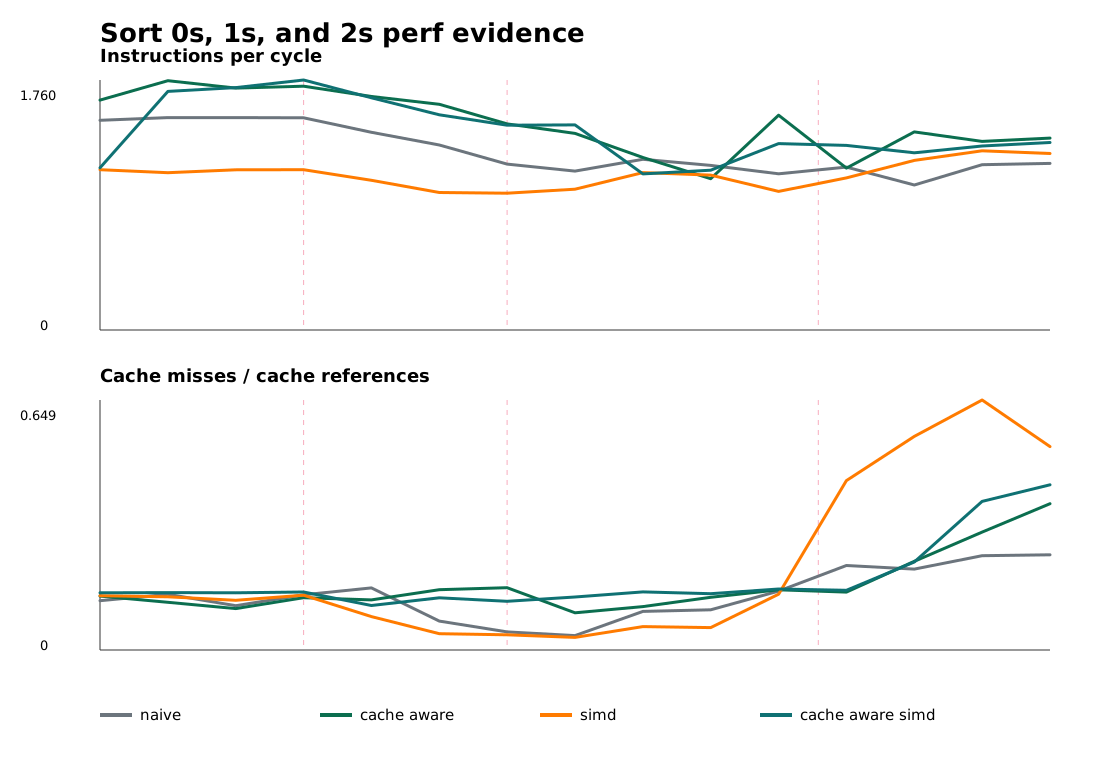
| naive | 35.8583 ns | 1.173 | 24.72 | 10.89 | 0.27 |
| cache-aware | 4.3231 ns | 1.351 | 37.99 | 6.53 | 0.23 |
| SIMD | 11.2804 ns | 1.242 | 52.82 | 13.01 | 0.37 |
| cache-aware + SIMD | 1.9068 ns | 1.320 | 42.88 | 8.43 | 0.25 |
4.8 BFS of Graph
Traverse graph vertices in breadth-first order.naive adjacency list:
vertex u -> [(dst|cold cold cold), (dst|cold cold cold), ...]
issue: each neighbor visit carries unused edge fields
cache-aware CSR:
offsets: [0, 8, 16, 24, ...]
edges: [dst dst dst dst dst dst ...]
change: neighbors are compact and contiguous
SIMD:
gather dst values + gather visited[dst]
issue: enqueue/visited updates still happen lane by lane
cache-aware + SIMD:
load contiguous CSR dst values, but visited checks still serialize// Naive: adjacency-list records carry cold fields with each destination.
// Major difference: each edge record has more data than BFS needs.
NOINLINE NOVECTOR std::uint64_t bfs_naive_adjlist(const GraphAdjList& graph, std::size_t passes) {
const std::size_t vertices = graph.edges.size();
std::vector<std::uint32_t> queue(vertices);
std::vector<int> visited(vertices, 0);
std::uint64_t total = 0;
for (std::size_t pass = 0; pass < passes; ++pass) {
std::fill(visited.begin(), visited.end(), 0);
const std::uint32_t source = static_cast<std::uint32_t>((pass * 17) % vertices);
std::size_t head = 0;
std::size_t tail = 0;
visited[source] = 1;
queue[tail++] = source;
while (head < tail) {
const std::uint32_t node = queue[head++];
total += node;
for (const GraphEdgeRecord& edge : graph.edges[node]) {
// BFS only needs edge.dst; cold0/cold1/cold2 still traveled with it.
if (visited[edge.dst] == 0) {
// This visited check is data dependent and controls queue growth.
visited[edge.dst] = 1;
queue[tail++] = edge.dst;
}
}
}
total += tail;
}
return total;
}
// Cache-aware: CSR stores only destination IDs in one dense edge array.
// Major difference from naive: adjacency data is offsets[] + compact edges[].
NOINLINE NOVECTOR std::uint64_t bfs_cache_csr(const GraphCsr& graph, std::size_t passes) {
const std::size_t vertices = graph.offsets.size() - 1;
std::vector<std::uint32_t> queue(vertices);
std::vector<int> visited(vertices, 0);
std::uint64_t total = 0;
for (std::size_t pass = 0; pass < passes; ++pass) {
std::fill(visited.begin(), visited.end(), 0);
const std::uint32_t source = static_cast<std::uint32_t>((pass * 17) % vertices);
std::size_t head = 0;
std::size_t tail = 0;
visited[source] = 1;
queue[tail++] = source;
while (head < tail) {
const std::uint32_t node = queue[head++];
total += node;
// The neighbor range is contiguous in graph.edges.
for (std::uint32_t edge = graph.offsets[node]; edge < graph.offsets[node + 1]; ++edge) {
const std::uint32_t next = graph.edges[edge];
if (visited[next] == 0) {
// Still branchy, but now the edge stream is cache-friendly.
visited[next] = 1;
queue[tail++] = next;
}
}
}
total += tail;
}
return total;
}
// SIMD: gather destination and visited state for adjacency-list records.
// Major difference: tries to batch neighbor loads, but cannot batch queue mutation cleanly.
NOINLINE std::uint64_t bfs_simd_adjlist(const GraphAdjList& graph, std::size_t passes) {
const std::size_t vertices = graph.edges.size();
std::vector<std::uint32_t> queue(vertices);
std::vector<int> visited(vertices, 0);
std::uint64_t total = 0;
alignas(32) std::array<std::uint32_t, kBatchLanes> dst_lanes{};
constexpr std::int32_t kStrideWords = static_cast<std::int32_t>(sizeof(GraphEdgeRecord) / sizeof(std::uint32_t));
const __m256i zero = _mm256_setzero_si256();
for (std::size_t pass = 0; pass < passes; ++pass) {
std::fill(visited.begin(), visited.end(), 0);
const std::uint32_t source = static_cast<std::uint32_t>((pass * 17) % vertices);
std::size_t head = 0;
std::size_t tail = 0;
visited[source] = 1;
queue[tail++] = source;
while (head < tail) {
const std::uint32_t node = queue[head++];
total += node;
const auto& edges = graph.edges[node];
const int* base = reinterpret_cast<const int*>(edges.data());
std::size_t edge = 0;
for (; edge + kBatchLanes <= edges.size(); edge += kBatchLanes) {
// Gather destination fields from records that also contain cold fields.
const __m256i edge_indices = _mm256_setr_epi32(static_cast<int>((edge + 0) * kStrideWords),
static_cast<int>((edge + 1) * kStrideWords),
static_cast<int>((edge + 2) * kStrideWords),
static_cast<int>((edge + 3) * kStrideWords),
static_cast<int>((edge + 4) * kStrideWords),
static_cast<int>((edge + 5) * kStrideWords),
static_cast<int>((edge + 6) * kStrideWords),
static_cast<int>((edge + 7) * kStrideWords));
const __m256i next_nodes =
_mm256_i32gather_epi32(base, edge_indices, sizeof(std::uint32_t));
// Second gather: visited[] is indexed by arbitrary destination IDs.
const __m256i seen =
_mm256_i32gather_epi32(visited.data(), next_nodes, static_cast<int>(sizeof(int)));
_mm256_store_si256(reinterpret_cast<__m256i*>(dst_lanes.data()), next_nodes);
const int unseen_mask = mask_bits(_mm256_cmpeq_epi32(seen, zero));
// Major limiter: queue insertion and duplicate checks remain lane-by-lane.
for (std::size_t lane = 0; lane < kBatchLanes; ++lane) {
if (((unseen_mask >> lane) & 1) != 0 && visited[dst_lanes[lane]] == 0) {
visited[dst_lanes[lane]] = 1;
queue[tail++] = dst_lanes[lane];
}
}
}
for (; edge < edges.size(); ++edge) {
const std::uint32_t next = edges[edge].dst;
if (visited[next] == 0) {
visited[next] = 1;
queue[tail++] = next;
}
}
}
total += tail;
}
return total;
}
// Cache-aware + SIMD: contiguous CSR edge loads, but visited checks still serialize.
// Major difference from SIMD adjacency list: destination load is dense, visited gather remains.
NOINLINE std::uint64_t bfs_cache_simd_csr(const GraphCsr& graph, std::size_t passes) {
const std::size_t vertices = graph.offsets.size() - 1;
std::vector<std::uint32_t> queue(vertices);
std::vector<int> visited(vertices, 0);
std::uint64_t total = 0;
alignas(32) std::array<std::uint32_t, kBatchLanes> dst_lanes{};
const __m256i zero = _mm256_setzero_si256();
for (std::size_t pass = 0; pass < passes; ++pass) {
std::fill(visited.begin(), visited.end(), 0);
const std::uint32_t source = static_cast<std::uint32_t>((pass * 17) % vertices);
std::size_t head = 0;
std::size_t tail = 0;
visited[source] = 1;
queue[tail++] = source;
while (head < tail) {
const std::uint32_t node = queue[head++];
total += node;
std::uint32_t edge = graph.offsets[node];
const std::uint32_t edge_limit = graph.offsets[node + 1];
for (; edge + kBatchLanes <= edge_limit; edge += static_cast<std::uint32_t>(kBatchLanes)) {
// CSR gives a real packed load for destinations.
const __m256i next_nodes =
_mm256_loadu_si256(reinterpret_cast<const __m256i*>(graph.edges.data() + edge));
// But visited state is still scattered by node id.
const __m256i seen =
_mm256_i32gather_epi32(visited.data(), next_nodes, static_cast<int>(sizeof(int)));
_mm256_store_si256(reinterpret_cast<__m256i*>(dst_lanes.data()), next_nodes);
const int unseen_mask = mask_bits(_mm256_cmpeq_epi32(seen, zero));
// This scalar enqueue loop is why cache-aware scalar can still beat SIMD.
for (std::size_t lane = 0; lane < kBatchLanes; ++lane) {
if (((unseen_mask >> lane) & 1) != 0 && visited[dst_lanes[lane]] == 0) {
visited[dst_lanes[lane]] = 1;
queue[tail++] = dst_lanes[lane];
}
}
}
for (; edge < edge_limit; ++edge) {
const std::uint32_t next = graph.edges[edge];
if (visited[next] == 0) {
visited[next] = 1;
queue[tail++] = next;
}
}
}
total += tail;
}
return total;
}
| Variant | 64 MiB timing | IPC | cache miss % | L1 miss % | dTLB miss % |
|---|---|---|---|---|---|
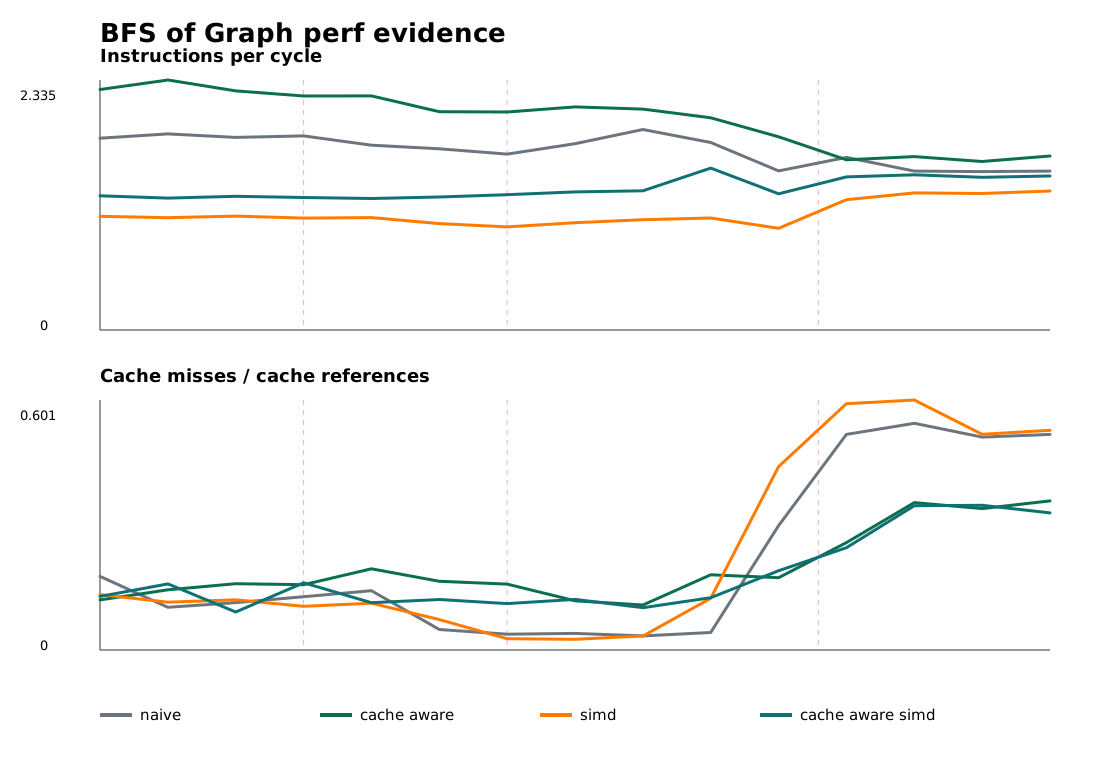
| naive | 74.2690 ns | 1.484 | 51.80 | 5.12 | 0.12 |
| cache-aware | 54.1225 ns | 1.625 | 35.83 | 4.76 | 0.08 |
| SIMD | 144.3282 ns | 1.299 | 52.78 | 5.38 | 0.11 |
| cache-aware + SIMD | 65.9072 ns | 1.438 | 32.94 | 4.23 | 0.08 |
4.9 Transpose of Matrix
Transpose a dense row-major matrix.naive:
read src row: a b c d ...
write dst column: a
b
c
d
issue: stores stride by dim
cache-aware:
process tile:
src tile 32x32 -> dst tile 32x32
change: read/write working set stays closer to cache
SIMD:
transpose 4x4 chunks, but still walks the full matrix without tile locality
cache-aware + SIMD:
tile 32x32, and inside each tile transpose 4x4 SIMD chunks// Naive: row-major reads, column-major writes.
// Major difference: the store is strided by dim, so writes miss badly as dim grows.
NOINLINE NOVECTOR void transpose_naive(const float* src, float* dst, std::size_t dim) {
for (std::size_t row = 0; row < dim; ++row) {
for (std::size_t col = 0; col < dim; ++col) {
// src is contiguous across col; dst jumps by dim for each next col.
dst[col * dim + row] = src[row * dim + col];
}
}
}
// Cache-aware: tile the transpose so read/write working sets stay smaller.
// Major difference from naive: operate on a small row/column tile before moving on.
NOINLINE NOVECTOR void transpose_cache_blocked(const float* src, float* dst, std::size_t dim) {
for (std::size_t row_block = 0; row_block < dim; row_block += kTransposeBlock) {
for (std::size_t col_block = 0; col_block < dim; col_block += kTransposeBlock) {
const std::size_t row_limit = std::min(dim, row_block + kTransposeBlock);
const std::size_t col_limit = std::min(dim, col_block + kTransposeBlock);
for (std::size_t row = row_block; row < row_limit; ++row) {
for (std::size_t col = col_block; col < col_limit; ++col) {
// Same assignment as naive, but now repeated writes land inside a tile.
dst[col * dim + row] = src[row * dim + col];
}
}
}
}
}
void transpose4x4_simd(const float* src, std::size_t src_stride, float* dst, std::size_t dst_stride) {
// Four row loads become four transposed row stores.
// This is the SIMD primitive used by both SIMD variants.
__m128 row0 = _mm_loadu_ps(src + 0 * src_stride);
__m128 row1 = _mm_loadu_ps(src + 1 * src_stride);
__m128 row2 = _mm_loadu_ps(src + 2 * src_stride);
__m128 row3 = _mm_loadu_ps(src + 3 * src_stride);
_MM_TRANSPOSE4_PS(row0, row1, row2, row3);
_mm_storeu_ps(dst + 0 * dst_stride, row0);
_mm_storeu_ps(dst + 1 * dst_stride, row1);
_mm_storeu_ps(dst + 2 * dst_stride, row2);
_mm_storeu_ps(dst + 3 * dst_stride, row3);
}
// SIMD: transpose 4x4 blocks, but still walks the whole matrix naively.
// Major difference from cache-aware + SIMD: no outer cache tile.
NOINLINE void transpose_simd_naive(const float* src, float* dst, std::size_t dim) {
const std::size_t simd_dim = dim - (dim % 4);
for (std::size_t row = 0; row < simd_dim; row += 4) {
for (std::size_t col = 0; col < simd_dim; col += 4) {
// SIMD fixes the 4x4 register shuffle, but the global traversal is still broad.
transpose4x4_simd(src + row * dim + col, dim, dst + col * dim + row, dim);
}
for (std::size_t col = simd_dim; col < dim; ++col) {
for (std::size_t lane = 0; lane < 4 && row + lane < dim; ++lane) {
dst[col * dim + (row + lane)] = src[(row + lane) * dim + col];
}
}
}
for (std::size_t row = simd_dim; row < dim; ++row) {
for (std::size_t col = 0; col < dim; ++col) {
dst[col * dim + row] = src[row * dim + col];
}
}
}
// Cache-aware + SIMD: block the matrix and transpose 4x4 chunks inside each tile.
// Major difference: tile locality and SIMD register transpose are used together.
NOINLINE void transpose_cache_simd_blocked(const float* src, float* dst, std::size_t dim) {
const std::size_t simd_dim = dim - (dim % 4);
for (std::size_t row_block = 0; row_block < dim; row_block += kTransposeBlock) {
for (std::size_t col_block = 0; col_block < dim; col_block += kTransposeBlock) {
const std::size_t row_limit = std::min(dim, row_block + kTransposeBlock);
const std::size_t col_limit = std::min(dim, col_block + kTransposeBlock);
std::size_t row = row_block;
for (; row + 4 <= row_limit && row < simd_dim; row += 4) {
std::size_t col = col_block;
for (; col + 4 <= col_limit && col < simd_dim; col += 4) {
// This is the main win: 4x4 SIMD transpose inside a cache-sized tile.
transpose4x4_simd(src + row * dim + col, dim, dst + col * dim + row, dim);
}
for (; col < col_limit; ++col) {
for (std::size_t lane = 0; lane < 4; ++lane) {
dst[col * dim + (row + lane)] = src[(row + lane) * dim + col];
}
}
}
for (; row < row_limit; ++row) {
for (std::size_t col = col_block; col < col_limit; ++col) {
dst[col * dim + row] = src[row * dim + col];
}
}
}
}
}
| Variant | 64 MiB timing | IPC | cache miss % | L1 miss % | dTLB miss % |
|---|---|---|---|---|---|
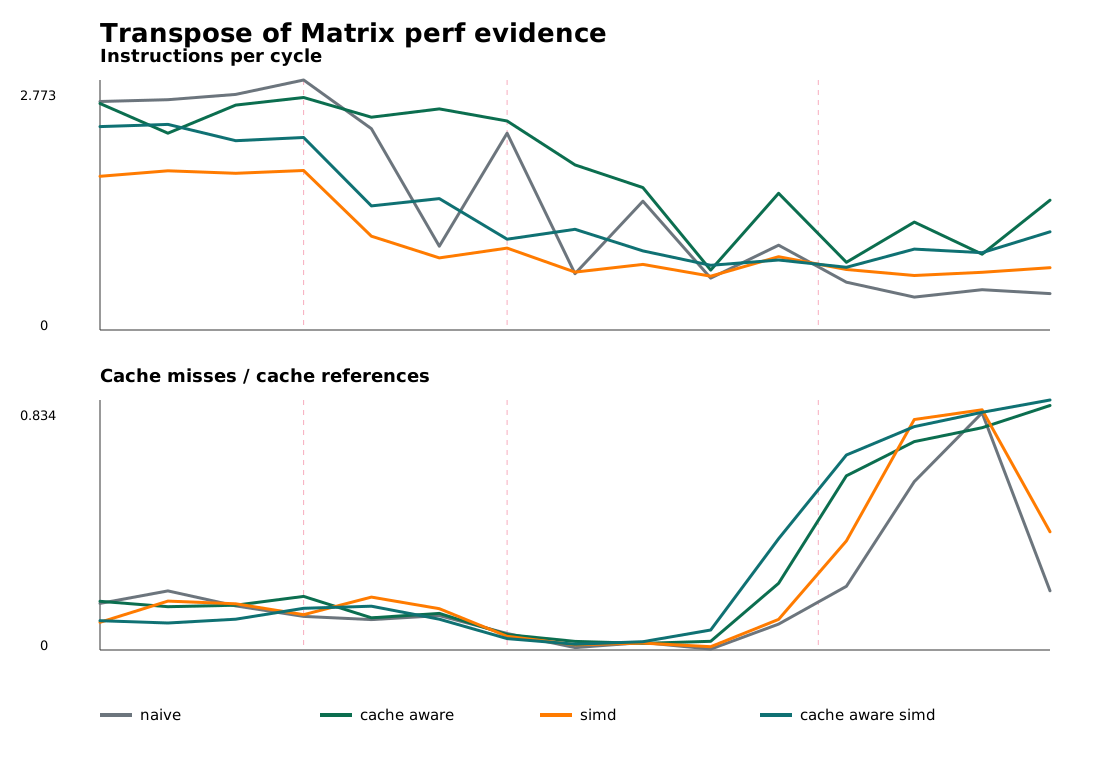
| naive | 0.2023 GiB/s | 0.403 | 19.75 | 58.74 | 0.29 |
| cache-aware | 1.5820 GiB/s | 1.439 | 81.52 | 10.19 | 0.22 |
| SIMD | 0.7610 GiB/s | 0.691 | 39.41 | 26.43 | 0.32 |
| cache-aware + SIMD | 2.4765 GiB/s | 1.090 | 83.35 | 11.02 | 0.28 |
4.10 Multiply Two Matrices
Multiply two dense square matrices.naive:
C[i][j] += A[i][k] * B[k][j]
A row is linear, B column jumps by n
issue: poor B locality dominates
cache-aware:
build BT[j][k] = B[k][j]
C[i][j] = dot(A row, BT row)
change: both inputs in the dot product are linear
SIMD:
load 8 A values, gather 8 B column values
issue: vector math is wide, B still jumps
cache-aware + SIMD:
block i/k/j:
keep A scalar reused, stream B row segment, update C row segment with AVX2// Naive: inner loop reads B down a column, creating poor locality.
// Major difference: this is the textbook loop order, but it is cache-hostile for B.
NOINLINE NOVECTOR void matmul_naive(const float* a, const float* b, float* c, std::size_t n) {
std::fill_n(c, n * n, 0.0f);
for (std::size_t i = 0; i < n; ++i) {
for (std::size_t j = 0; j < n; ++j) {
float sum = 0.0f;
for (std::size_t k = 0; k < n; ++k) {
// A[i*n+k] is linear across k, but B[k*n+j] jumps by n floats.
sum += a[i * n + k] * b[k * n + j];
}
c[i * n + j] = sum;
}
}
}
// Cache-aware: pretranspose B so each dot product is two linear reads.
// Major difference from naive: pay one transpose so the hot inner loop streams rows.
void transpose_square_matrix(const float* src, float* dst, std::size_t n) {
for (std::size_t i = 0; i < n; ++i) {
for (std::size_t j = 0; j < n; ++j) {
dst[j * n + i] = src[i * n + j];
}
}
}
NOINLINE NOVECTOR void matmul_cache_transposed(const float* a, const float* bt, float* c, std::size_t n) {
std::fill_n(c, n * n, 0.0f);
for (std::size_t i = 0; i < n; ++i) {
const float* row_a = a + i * n;
for (std::size_t j = 0; j < n; ++j) {
// row_bt is the old B column laid out as a row.
const float* row_bt = bt + j * n;
float sum = 0.0f;
for (std::size_t k = 0; k < n; ++k) {
// Both row_a[k] and row_bt[k] advance linearly.
sum += row_a[k] * row_bt[k];
}
c[i * n + j] = sum;
}
}
}
// SIMD: vectorize the dot product, but gather B's column.
// Major difference: this widens arithmetic without fixing B's column access.
NOINLINE void matmul_simd_gather(const float* a, const float* b, float* c, std::size_t n) {
std::fill_n(c, n * n, 0.0f);
for (std::size_t i = 0; i < n; ++i) {
const float* row_a = a + i * n;
for (std::size_t j = 0; j < n; ++j) {
__m256 acc = _mm256_setzero_ps();
std::size_t k = 0;
for (; k + kAvxWidthFloats <= n; k += kAvxWidthFloats) {
// A is a clean packed load.
const __m256 avec = _mm256_load_ps(row_a + k);
// B is still a column, so the eight B addresses are strided by n.
const __m256i bindex = _mm256_setr_epi32(static_cast<int>((k + 0) * n + j),
static_cast<int>((k + 1) * n + j),
static_cast<int>((k + 2) * n + j),
static_cast<int>((k + 3) * n + j),
static_cast<int>((k + 4) * n + j),
static_cast<int>((k + 5) * n + j),
static_cast<int>((k + 6) * n + j),
static_cast<int>((k + 7) * n + j));
// This gather is the major reason plain SIMD does not win here.
const __m256 bcol = _mm256_i32gather_ps(b, bindex, sizeof(float));
acc = _mm256_add_ps(acc, _mm256_mul_ps(avec, bcol));
}
float sum = horizontal_sum_ps(acc);
for (; k < n; ++k) {
sum += row_a[k] * b[k * n + j];
}
c[i * n + j] = sum;
}
}
}
// Cache-aware + SIMD: blocked i/k/j loop reuses A and streams B/C across rows.
// Major difference from plain SIMD: B and C are accessed as row segments, not columns.
NOINLINE void matmul_cache_simd_blocked(const float* a, const float* b, float* c, std::size_t n) {
constexpr std::size_t kBlockI = 32;
constexpr std::size_t kBlockJ = 64;
constexpr std::size_t kBlockK = 64;
std::fill_n(c, n * n, 0.0f);
for (std::size_t ii = 0; ii < n; ii += kBlockI) {
// Blocks keep the active A/B/C working set smaller.
const std::size_t i_end = std::min(ii + kBlockI, n);
for (std::size_t kk = 0; kk < n; kk += kBlockK) {
const std::size_t k_end = std::min(kk + kBlockK, n);
for (std::size_t jj = 0; jj < n; jj += kBlockJ) {
const std::size_t j_end = std::min(jj + kBlockJ, n);
for (std::size_t i = ii; i < i_end; ++i) {
for (std::size_t k = kk; k < k_end; ++k) {
// Reuse one A value across a vector of B/C columns.
const __m256 aval = _mm256_set1_ps(a[i * n + k]);
std::size_t j = jj;
for (; j + kAvxWidthFloats <= j_end; j += kAvxWidthFloats) {
// B and C are contiguous here. This is the section making
// the major measured difference versus gathered B columns.
const __m256 cvec = _mm256_loadu_ps(c + i * n + j);
const __m256 bvec = _mm256_loadu_ps(b + k * n + j);
_mm256_storeu_ps(c + i * n + j,
_mm256_add_ps(cvec, _mm256_mul_ps(aval, bvec)));
}
for (; j < j_end; ++j) {
c[i * n + j] += a[i * n + k] * b[k * n + j];
}
}
}
}
}
}
}
| Variant | 64 MiB timing | IPC | cache miss % | L1 miss % | dTLB miss % |
|---|---|---|---|---|---|
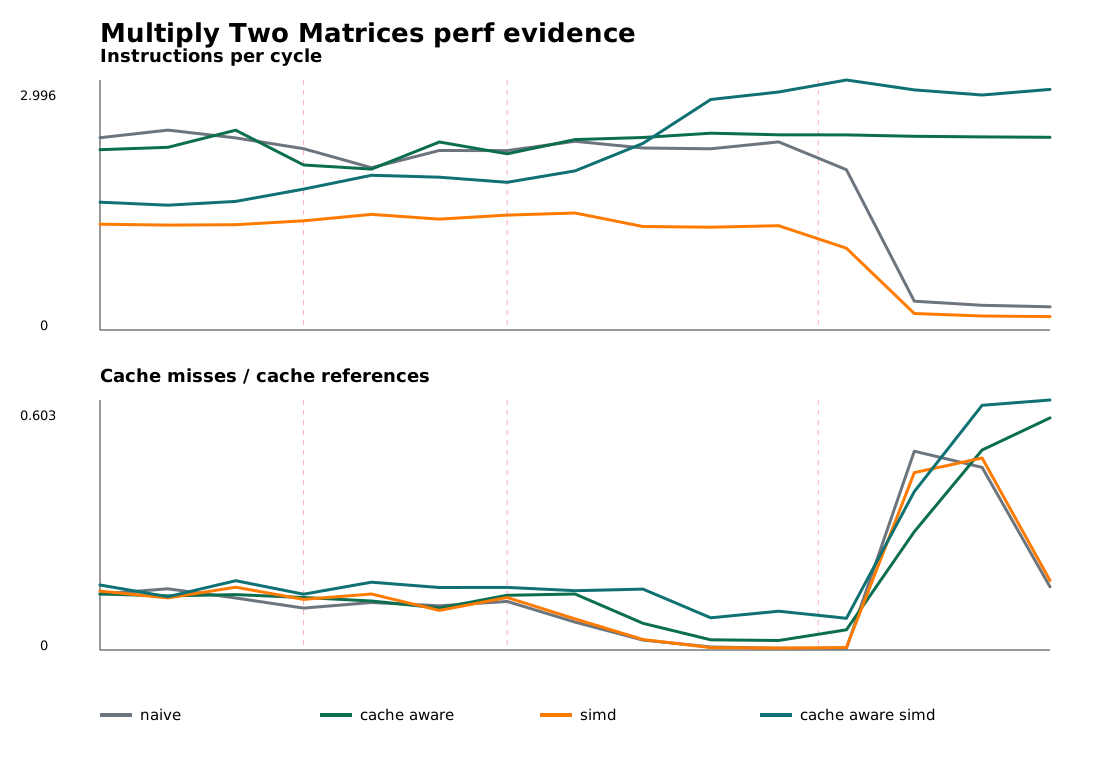
| naive | 0.0001 GiB/s | 0.278 | 15.24 | 66.44 | 48.51 |
| cache-aware | 0.0012 GiB/s | 2.310 | 55.95 | 3.23 | 0.00 |
| SIMD | 0.0001 GiB/s | 0.161 | 16.75 | 104.31 | 76.22 |
| cache-aware + SIMD | 0.0094 GiB/s | 2.883 | 60.28 | 2.52 | 0.04 |
5. Reproduction
python3 scripts/run_dsa_evidence.py \
  --exe build_evidence/cache_bench \
  --results-dir results/cache_simd_dsa_haswell_20260609_full_evidence \
  --iterations 3 \
  --threads 4 \
  --taskset 0,2,4,6 \
  --perf-repeats 1 \
  --timing-timeout 900 \
--matmul-timeout 1800Primary references